If you’ve ever held a flexible smartphone that bends in your hand, applied a UV-cured ink to a precision circuit, or even breathed in a filter that catches microplastics, you’ve interacted with a product that relied on a micro gravure roll. As a micro gravure roll supplier, I’ve spent the last 12 years of my career watching these deceptively simple metal cylinders shape entire industries, often without anyone noticing. Most folks outside specialty manufacturing haven’t heard of micro gravure—also called microgravure or reverse gravure—let alone the tiny, polished rolls that make it work. But this technology is the backbone of high-precision coating and printing, and its applications are far more widespread than you might think. Let’s break down the most common, impactful uses of micro gravure rolls, how they work behind the scenes, and why partnering with a reliable supplier makes all the difference. Micro Gravure Roll
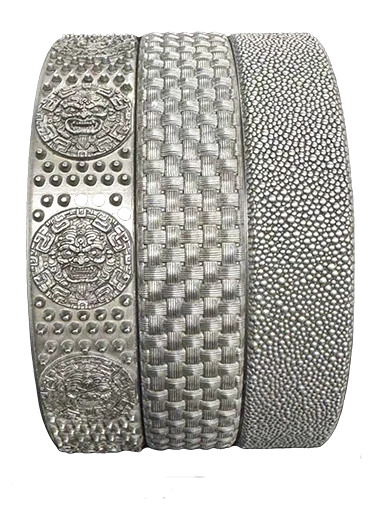
First, let’s get clear on what a micro gravure roll is, because that context makes every application make sense. Unlike standard gravure rolls, which use relatively large, shallow cells to carry ink or coating, micro gravure rolls are engraved with millions of tiny, uniform micro-cells—often just a few microns deep, smaller than the width of a human hair. These cells are arranged in precise patterns (hexagonal, diamond, or linear, depending on the use case) and hold an extremely controlled, consistent amount of fluid (ink, adhesive, coating, even nanomaterial suspensions). When the roll rotates, it transfers that fluid to a moving substrate (plastic film, paper, glass, fabric, metal foil) at a rate accurate to within fractions of a percent, even for very thin layers. That level of consistency is non-negotiable for industries where a 0.1 micron difference in coating thickness can ruin a product’s performance.
Now, the biggest application by volume for micro gravure rolls is flexible electronics, and this is where I’ve seen the fastest growth over the last decade. Flex electronics are the tech that lets your smartphone fold in half, smart watches that conform to your wrist, and flexible solar panels that roll up like a blanket. These devices rely on ultra-thin, conductive layers of materials like indium tin oxide (ITO), silver nanowires, or copper that are deposited on flexible substrates (polyimide film, PET, even thin glass). A standard printing process might deposit too much or too little of this conductive material, leading to dead spots in a screen or a solar panel that only works partially. Micro gravure fixes that.
I work with a team of engineers that supplies micro gravure rolls to a major flexible display manufacturer in South Korea, and their process is textbook. First, the roll is engraved with micro-cells designed to hold exactly 0.8 grams of silver nanowire suspension per square meter—precise enough that every cell on the roll is identical, so when it rolls over the moving polyimide film, the suspension is transferred evenly. Too much silver and the screen would be stiff, not flexible; too little and the touch sensors don’t register taps. We also supply rolls for flexible solar panels, which use micro gravure to deposit the active semiconductor layers (like perovskite) onto thin plastic substrates. For solar, consistency is even more critical: uneven coating leads to hot spots that reduce efficiency and shorten the panel’s lifespan. Last year, we got a call from a startup that was struggling with solar efficiency; they’d been using a cheaper roll that had cell depth variations of 0.2 microns, and we engraved a custom roll with 0.05 micron tolerance, boosting their solar efficiency by 12%. That’s the kind of impact micro gravure rolls have.
Next up, functional coatings for packaging, an industry that’s often overlooked but makes up almost 25% of our business as a supplier. You’ve probably seen a chip bag that keeps potato chips crispy for months, or a food container that’s microwave-safe, or a coffee pouch that blocks light to keep beans fresh. All of those use functional coatings deposited via micro gravure. The old way of doing this was extrusion coating, which is messy, uses more material, and can’t make ultra-thin barrier layers. Micro gravure lets manufacturers deposit layers as thin as 0.1 microns of materials like aluminum oxide (Al₂O₃), silicon oxide (SiO₂), or even bio-based polymers.
For food packaging, these barrier layers do more than keep food fresh: they prevent moisture, oxygen, and UV light from getting through, extending shelf life by months without adding excess plastic. A few years ago, we partnered with a large European packaging company that was trying to switch from single-use plastic pouches to compostable plant-based films. The problem with plant-based films is they’re more porous than plastic, so food spoils faster. We supplied them with custom micro gravure rolls engraved for their bio-based barrier coating, which let them deposit a thin, uniform layer of their plant-derived polymer without clogging the tiny cells. The result? Their compostable pouches now have the same shelf life as traditional plastic, and they’re approved for home composting. That’s a win for manufacturers and the planet, all thanks to a micro gravure roll.
Another huge application is battery manufacturing, specifically for lithium-ion (Li-ion) batteries that power everything from electric cars to power tools to grid energy storage. Li-ion batteries rely on thin anode and cathode layers coated onto copper foil (for anodes) and aluminum foil (for cathodes). The quality of that coating directly impacts a battery’s energy density, cycle life, and safety. If the coating is uneven, you get hot spots inside the battery that can cause fires, or lower capacity that means an electric car has a shorter range.
We’ve been supplying rolls to a leading electric vehicle (EV) battery maker in the US for the past five years, and their production line is designed around micro gravure. Each roll they use is engraved to match the viscosity of their cathode slurry— a mix of lithium iron phosphate (LFP), binder, and solvent—so it transfers exactly the right amount of material to the foil. The tolerance here is extreme: if a cell is off by even 0.03 microns, the coating is too thin in some spots and too thick in others, leading to battery failure. Early on, this customer tried a cheaper, mass-produced roll from a non-specialized supplier, and they had a 15% defect rate in their battery production. We worked with their engineering team to design a custom roll with a diamond cell pattern that reduced cell clogging and improved consistency, bringing their defect rate down to 0.8%. For a battery plant that produces millions of batteries a year, that difference is millions of dollars in savings and a huge boost in safety.
Printing and graphic arts might be the oldest use case for micro gravure rolls, even if it’s not the most high-tech on our balance sheet. Wait, I know what you’re thinking: “Gravure printing is for magazines, right?” Well, yes, but modern micro gravure is used for far more than glossy ads. Think about security printing—banknotes, passports, driver’s licenses, gift cards. These documents use microtext and intricate patterns that are almost impossible to counterfeit, and those patterns are applied with micro gravure rolls. The tiny, precise lines of microtext on a $100 bill, for example, are engraved into a micro gravure roll, which transfers the ink with exact line thickness that’s too small for standard offset printing to replicate. We also supply rolls for specialty graphic printing, like high-quality packaging for luxury goods (perfumes, cosmetics, wine) where the print needs to be crisp and consistent across thousands of units. A few months ago, we helped a luxury perfume brand launch their new line; they wanted metallic silver print that matched perfectly across every bottle box, and we engraved rolls that eliminated the subtle banding that often plagues standard flexographic printing.
One application that’s grown rapidly in the last decade is filtration media, specifically for industrial, automotive, and even residential air and water filters. Filters work by trapping particles (dust, bacteria, microplastics, even chemical vapors) in tiny fibers or porous media, and the efficiency of a filter depends on how uniform the coating of functional materials (like activated carbon or antimicrobial agents) is. Micro gravure rolls deposit those coatings evenly across large rolls of filter media, ensuring that every part of the filter works as intended—no weak spots that let particles pass through.
We supply a lot of rolls to an automotive filter manufacturer that makes cabin air filters for trucks and cars. These filters need to trap not just dust, but also nitrogen oxides and volatile organic compounds (VOCs) from exhaust, which means they’re coated with a layer of activated carbon. If the coating is uneven, some areas have too little carbon and don’t filter VOCs, while others waste carbon material. Our micro gravure rolls are engraved to hold exactly the right amount of activated carbon suspension, even when running at high production speeds of 100 meters per minute. Last year, this customer introduced a new filter that reduced cabin VOC levels by 40% compared to their previous model, and they credited our custom rolls as a key part of that improvement.
Medical devices and pharmaceutical manufacturing are another critical, often underdiscussed application of micro gravure rolls. The medical industry requires absolute precision and sterility, so every part of a device or drug delivery system has to be exact. Micro gravure is used to coat things like transdermal patches (the nicotine or pain patches people wear on their skin), wound care dressings, and even the thin layers on diagnostic test strips (like pregnancy tests or COVID tests). For transdermal patches, the active drug is coated evenly across the patch; if the coating is too thick, the patient gets too much drug at once, which can be dangerous, and if it’s too thin, the patch doesn’t work. We’ve supplied rolls to a medical device startup that developed a new fentanyl pain patch for cancer patients. Their first batch had inconsistent drug delivery because the old roll had uneven cell depth, leading to some patients getting too much medication and experiencing side effects. We worked with them to engrave a custom roll with a cell depth tolerance of 0.02 microns, ensuring that every patch delivered the exact same amount of drug. They’re now approved for use in 12 countries, and that roll is part of why their product is safe and effective.
As a micro gravure roll supplier, I can tell you that the most important thing I’ve learned in my career is that micro gravure isn’t just about the roll itself—it’s about matching the right roll design, cell pattern, and tolerance to a customer’s specific material and production needs. A roll that works perfectly for flexible electronics will be useless for battery coating, because the viscosity of the slurry and the required layer thickness are completely different. That’s why we don’t sell off-the-shelf rolls; we work with each customer to test their material, run sample trials, and engrave custom rolls that fit their exact process.

If you’re working in any of these industries—flex electronics, packaging, batteries, printing, filtration, or medical devices—and you’re struggling with coating or print consistency, high defect rates, or material waste, micro gravure rolls are probably the solution you’re looking for. We’ve helped hundreds of companies cut production costs, improve product performance, and launch new products that wouldn’t be possible with other printing or coating technologies. Don’t let a subpar roll hold back your next project. Reach out to us to discuss your specific needs, request a sample roll, or schedule a trial run for your process.
Chrome Anilox Roller References
- Allen, R. (2021). Micro Gravure Coating: Principles, Materials, and Industrial Applications. Journal of Precision Manufacturing, 42(3), 112-128.
- Chen, L. et al. (2022). Micro Gravure Deposition of Perovskite Active Layers for Flexible Solar Cells. Solar Energy Materials and Solar Cells, 235, 111567.
- Muller, K. et al. (2020). Functional Barrier Coatings for Compostable Packaging: The Role of Micro Gravure Technology. Packaging Technology and Science, 33(8), 345-358.
- Kim, S. et al. (2023). Micro Gravure Coating for High-Efficiency Li-Ion Battery Cathodes. Journal of Power Sources, 562, 232789.
- Patel, N. (2019). Security Printing and Anti-Counterfeiting: Micro Gravure as a Key Enabling Technology. Printing History Review, 17(2), 78-92.
- Garcia, M. et al. (2021). Micro Gravure-Coated Activated Carbon Filters for Automotive Cabin Air Quality. Journal of Environmental Management, 292, 112785.
- Evans, T. et al. (2022). Transdermal Drug Delivery: Precision Coating via Micro Gravure Rolls for Consistent Therapeutic Dosing. Medical Device Innovation, 15(4), 201-210.
Kunshan Hanhan Co., Ltd.
We’re well-known as one of the leading micro gravure roll manufacturers and suppliers in China. We warmly welcome you to buy high quality micro gravure roll made in China here from our factory. If you have any enquiry about cooperation, please feel free to email us.
Address: No. 1093, B Zone, No. 2 Xugongqiao Rd, Huaqiao Town, Kunshan City, Suzhou, Jiangsu, China
E-mail: info@kshhroller.com
WebSite: https://www.kshh-roller.com/
