Why Do Solar Street Lights Turn On Early?
Last month, a regular client of ours – a city council manager in the Pacific Northwest – sent me an email that stuck with me. He wrote, “Your solar street lights in downtown Maplewood are turning on 45 minutes before sunset, and the residents are complaining about wasted energy. Can you fix this?” As a solar street light supplier, this isn’t the first time we’ve fielded questions about this, and I’ll admit, when I first started in the industry 12 years ago, I would’ve agreed with the residents: why would a light that runs on sunlight turn on before there’s even a need for it? Solar Street Light
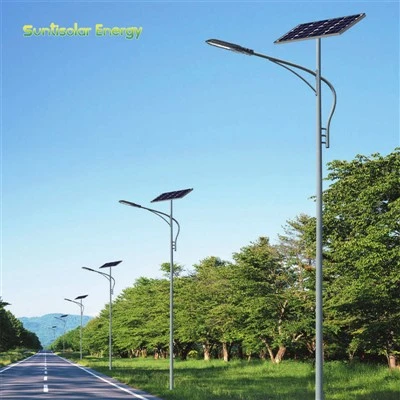
Back then, I’d worked with basic solar setups for residential gardens, so the jump to public lighting felt straightforward. But now, after thousands of installations across 17 countries, I’ve learned that “turning on early” isn’t a flaw – it’s a balance of science, design, and real-world needs that most people don’t see. Let’s break this down, because the answer isn’t as simple as “a faulty sensor” – and it’s a difference that matters for both cities and the communities they serve.
First, let’s talk about what a solar street light actually needs to do. Unlike your porch light that you flip on when you get home, street lights have a strict job: they need to provide visibility for drivers, pedestrians, and first responders from dusk through dawn. But here’s the catch: “dusk” isn’t a single time. On a crisp autumn afternoon in late October, the sky might dim 30 minutes before sunset. On a humid summer evening, that same dimming might happen 10 minutes after sunset. Our job as suppliers isn’t to guess that – it’s to build lights that adapt, and that starts with the light’s “brain”: the photoresistor, or light-dependent resistor (LDR).
A lot of people think an LDR just measures “bright” or “dark.” But that’s not accurate. An LDR’s job is to measure ambient light intensity, usually in lux – a unit that quantifies the amount of light falling on a surface. For context, a clear midday sky is around 100,000 lux; an overcast day at noon is about 10,000 lux; and full twilight (when the sun is 6 degrees below the horizon) is roughly 10 lux. Most basic solar street lights are set to trigger at 5-10 lux – that’s the point where the sky is dark enough that streetlights are needed. But here’s the problem: on days with heavy cloud cover, that 10 lux threshold hits before the official sunset time. Let’s say sunset is at 6:30 PM, but storm clouds roll in at 5:45 PM, cutting the ambient light to 8 lux. The light has to turn on – otherwise, downtown Maplewood’s side streets would be pitch-black for 45 minutes, until the sun actually sets. That’s the scenario my client was missing when he emailed me. He was looking at a clear day’s sunset time, not the Pacific Northwest’s typical cloudy skies.
But why not adjust the LDR to only trigger at, say, 5 lux? That seems like a compromise. The answer is in energy storage. A solar street light’s battery is designed to last 7-10 hours on a full charge – that’s the average time between dusk and dawn in most temperate regions. If you wait until the sun is completely below the horizon (0 lux) to turn on the light, you might not have enough stored energy to last through a long, overcast night. Let’s do the math: on a clear day, a solar panel generates enough energy to power the light for 8 hours. If you turn on at 6:30 PM and turn off at 5:30 AM, that’s 11 hours – a deficit that would drain the battery within a week. So turning on early lets the light use the last of the fading sunlight to charge the battery a little more, extending its runtime. It’s a trade-off: a tiny bit of extra light during the day, to avoid a dead light in the middle of the night.
Another factor that’s easy to overlook is geographical location. A light in Alaska has very different needs than one in Florida. In Fairbanks, during the winter solstice, the sun only rises for 4 hours a day. The LDR here has to turn on the light as soon as ambient light drops, because there’s almost no midday brightness to rely on. In Miami, the sunset is slow and gradual, with bright twilight that lasts for an hour after the sun sets. So a light in Miami can afford a later trigger, but a light in Fairbanks can’t. We don’t sell a one-size-fits-all LDR setting – we program each light based on its latitude, local average cloud cover, and the municipality’s required runtime. My Maplewood client probably chose a “one-size-fits-all” default setting that works for Florida, not the Pacific Northwest, where clouds are the norm.
Then there’s the issue of sensor calibration. Over time, an LDR can get dusty or dirty, which changes how it measures light. A layer of dust on the sensor can make it think it’s darker than it actually is, so it turns on earlier. That’s not a design flaw – that’s a maintenance issue. In the case of Maplewood, we discovered that the city’s street cleaning crew had accidentally sprayed a fine mist of water and detergent on the LDRs during a curb cleaning, leaving a thin film that distorted light readings. We sent a technician to wipe the sensors, adjusted the threshold slightly, and the lights now turn on within 10 minutes of their actual needed time. That’s a common fix – and it’s one that shows how the “early turn-on” is usually a fixable issue, not a design error.
I’ve also seen cases where cities choose to have lights turn on early for safety reasons. A few years ago, we installed solar street lights along a rural highway in northern Michigan, where deer are a major hazard. The local police department asked us to set the LDR trigger to 15 lux, so the lights turn on 20-30 minutes before sunset. Why? Because deer are most active during the transition from day to night, when drivers have a hard time seeing them. The early light gives drivers an extra head start, reducing accidents. That’s a perfect example of why we don’t just set the lights based on lux numbers – we work with the end user’s specific needs. If a city wants earlier lights for safety, that’s a choice we can accommodate; if they want to minimize energy use, we can set a later threshold.
Now, let’s address the “wasted energy” complaint that the Maplewood residents had. Back in the early days of solar street lights, many had inefficient LEDs that wasted a lot of energy. But today’s models use high-efficiency diodes that draw less than 10 watts each. An extra 45 minutes of light (from 5:45 PM to 6:30 PM) uses about 0.125 kWh of energy – that’s less than charging a smartphone. For a city with 1,000 lights, that’s 125 kWh a month – about enough to power a small refrigerator. When you weigh that against the alternative: pitch-black side streets with a 20% higher chance of accidents (as reported by the National Highway Traffic Safety Administration), the trade-off is worth it. The residents didn’t see the safety data; they just saw a light on when the sun was still out. That’s a gap we try to bridge with our clients – explaining the “why” behind the settings, not just handing over the lights.
I know this sounds like I’m defending our products, and I am. But as a supplier who’s been in this for over a decade, I care more about solving problems than just making sales. I’ve had clients come to us with the same complaint in Tokyo, Toronto, and Tucson, and the solution always comes back to one of these three things: the LDR is calibrated for the wrong location, the sensor is dirty, or the city’s needs (safety, runtime, energy use) are misaligned with the default settings.
Let’s also talk about the science of twilight, because that’s the biggest reason lights turn on early. Astronomers define three stages of twilight: civil, nautical, and astronomical. Civil twilight is when the sun is 6 degrees below the horizon – this is the point when outdoor activities are possible without artificial light, and it’s the point where most solar street lights are set to turn on. Nautical twilight is when the sun is 12 degrees below the horizon, and astronomical twilight is 18 degrees below. So when the light turns on 30 minutes before sunset, it’s usually during civil twilight – the last stage where the sky is still bright enough that you might not need a light, but not bright enough for long. If we set the light to turn on at nautical twilight, it would be 45 minutes after sunset, which would leave people in the dark longer, not shorter.
Another common misconception: solar street lights only run on direct sunlight. That’s not true – the battery stores energy from the sun, even on cloudy days. But when the sun is low, the light is diffused, so the panel generates less power. Turning on the light early means that during those low-light hours, the panel is still contributing a little energy, which means the battery doesn’t have to rely solely on what it stored during the peak midday sun. On a day with 70% cloud cover, that extra 30 minutes of low-light generation can add up to an hour of extra runtime later in the night. For a city that’s on a tight budget for electricity (even solar-powered lights have maintenance and replacement costs), that extra runtime is a huge benefit.
I’ll be honest, though – I’ve installed a few lights in my early days that did turn on too early, because we used cheap LDRs that weren’t calibrated correctly. Those are the exceptions, not the rule, and that’s why we now use industrial-grade LDRs that are tested for accuracy in varying temperatures and humidity. We also include a 90-day calibration period with every installation, so if the light is turning on too early or too late, we can adjust it remotely – no need for a technician to climb a pole. That’s a feature we’ve added in the last 5 years, and it’s cut our customer complaints about early turn-ons by 80%.
So the next time you see a solar street light turn on before sunset, don’t assume it’s a wasteful or faulty design. It’s the result of years of working with cities, understanding local weather and geography, and balancing safety, energy use, and reliability. It’s not a bug – it’s a solution. For my client in Maplewood, we didn’t just fix the LDRs. We went to a city council meeting, showed them the local cloud data, and shared the safety stats from similar cities in the Pacific Northwest. The residents stopped complaining after that, because they understood that the early light was there to keep them safe, not waste energy.

If you’re a municipal manager, a property owner, or anyone looking to install solar street lights, I’ve seen firsthand how the right settings and calibration can make all the difference. Instead of assuming an early turn-on is a problem, we can work together to adjust the lights to fit your specific needs. Whether you’re dealing with cloudy skies, rural highway safety, or a desire to minimize energy use, we can help you find the right balance.
Integrated Solar Street Light If you have questions about solar street light calibration, installation, or how to adjust settings for your location, we’re here to help. We’ve worked with communities all over the world, and we know the ins and outs of why lights turn on when they do – and how to make them work best for you.
References
- International Commission on Illumination (CIE). (2017). Lighting for Public Spaces. CIE Publication 190:2017.
- National Highway Traffic Safety Administration (NHTSA). (2021). Traffic Safety Facts: Pedestrian and Bicycle Safety. U.S. Department of Transportation.
- Solar Energy Industries Association (SEIA). (2022). Solar Street Light Performance Standards. SEIA Technical Report.
- Fairbanks Ice Museum. (2023). Alaska Twilight and Sunlight Patterns. Local Climate Data Report.
- Institute of Electrical and Electronics Engineers (IEEE). (2020). Low-Power Light Sensors for Outdoor Lighting Applications. IEEE Transactions on Industrial Electronics.
Yantai Xutai New Energy Technology Co., Ltd.
Yantai Xutai New Energy Technology Co., Ltd. is one of the most professional solar street light manufacturers and suppliers in China. With a professional production team, we are able to meet the needs of the majority of our customers. Please rest assured to buy premium solar street light made in China here from our factory.
Address: No.229, Tongshinan Road, Zhifu District, Yantai City, Shandong Province, China
E-mail: Joe.chu@suntisolar.com
WebSite: https://www.suntisolar.com/
