Hey everyone, I’m Mike, and I’ve been an industrial kiln supplier for almost 12 years now. On a weekly basis, someone hits me up asking a version of the same question: “Can industrial kilns even be automated? All the stuff I hear about automation sounds too good to be true for big, high-temp machines that handle materials like ceramics, cement, or lithium battery components.” If that’s your first thought, I don’t blame you. For decades, industrial kilns were seen as these clunky, hands-on machines—operators manually cranking valves, checking temperature gauges every hour, and tweaking cooling on the fly. But in the last 5 years, I’ve watched a lot of my customers shift away from manual setups, and honestly? The answer isn’t a simple “yes” or “no”—it’s more like, “It depends on what you’re making, and how much you’re willing to update your current setup.” Industrial Kiln
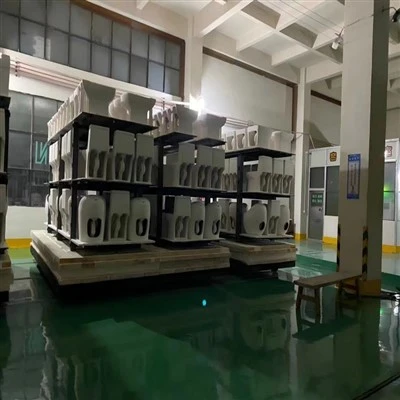
Let me start with the basics for anyone who’s not deep in industrial processes. An industrial kiln is basically a big oven—sometimes reaching 3,000°F or more—used to heat materials to change their chemical or physical properties. For example, a tile company might fire clay in a tunnel kiln, a battery maker will heat anode materials to remove moisture, and a steel mill uses a rotary kiln to process iron ore. Back in the day, all these runs were manual. An operator would stand in front of the kiln’s control panel, jot down numbers, and adjust gas flow if the temp dipped 10°F, because even a 5°F swing can mess up the final product. If you’ve ever had a batch of tiles come out with inconsistent color, or a battery anode fail a quality check, a big part of that was manual adjustments causing those tiny, unavoidable shifts.
Now, why would you want to automate a kiln? Let’s be real—manual kiln work isn’t just tedious, it’s risky. Those high temps mean operators have to work near extreme heat, and if something goes wrong (like a gas leak or a cooling system glitch), it can be dangerous. Plus, labor costs have skyrocketed in most industrial hubs over the last decade. I’ve had a customer in Ohio tell me they were spending $80,000 a year just to cover shifts for their two kiln operators, and those operators still made 10-15% more errors than when they tried a basic automated setup. Automation also fixes consistency: if you set a kiln to heat to 2,500°F over 8 hours, hold for 2 hours, and cool at 50°F per hour, the automation will do that exactly every time. No more human error from a tired operator taking a long lunch, or rushing a batch to meet a deadline.
But wait—before you go out and buy the fanciest automated kiln on the market, there are real limits. I once had a small pottery shop reach out to me last year, begging for a fully automated kiln setup. They make custom mugs and small pottery pieces, with runs of only 10-20 items every two weeks. The problem? Small-batch, custom work doesn’t make financial sense for full automation. The cost of installing the sensors, programming the software, and integrating it with their existing equipment would have been more than their annual profit from kiln use. That’s why automation works best for high-volume, repeatable runs—like a tile factory pumping out 10,000 tiles a day, or a lithium battery component plant making 50,000 units a month. For small shops, a semi-automated setup—like a digital temperature controller that cuts off the heat when it hits the right temp—might be enough, but full automation is overkill.
Another big factor is the type of kiln. There are three main types I deal with most: tunnel kilns, rotary kilns, and batch kilns. Tunnel kilns are long, conveyor-like kilns where products move through different temp zones—these are super easy to automate, because you can program each zone’s temp, speed, and cooling rate without much tweaking. I have a ceramic tile customer that’s been running an automated tunnel kiln for 6 years; they cut their product defect rate from 12% to 2% and saved $45k a year in labor costs. Rotary kilns, which are big rotating tubes used for cement or ore processing, are also great for automation. You can monitor the rotation speed, feed rate of raw materials, and gas flow in real time, which keeps the material processing consistent. The tricky one is batch kilns—those are the ones where you load a set amount of product, close the door, and run a single batch. Because every batch might be slightly different (different size pieces, different materials), full automation here requires more custom programming, which adds cost. But even for batch kilns, semi-automation is a game-changer: I have a small steel casting shop that switched from manual batch kilns to a setup with automated loaders and temp sensors, and they cut their batch time by 20% because they didn’t have to wait for an operator to check the temp every hour.
Now, what actually goes into automating an industrial kiln? A lot of people think it’s just slapping a button on a control panel, but there’s way more tech involved. First, you need sensors—temperature sensors (thermocouples, mostly, which can handle super high temps), pressure sensors for gas lines, humidity sensors for cooling zones, and even cameras to check for material buildup inside the kiln. Then, you need a programmable logic controller (PLC)—that’s basically the brain of the setup, where you input your process specs. For example, if you’re firing lithium anode material, you might program the PLC to heat to 1,800°F at 100°F per hour, hold for 3 hours, then cool to 100°F at 50°F per hour—exactly the parameters needed to make a high-quality anode. Then, you need a human-machine interface (HMI), which is the screen the operator uses to monitor the kiln, adjust settings if needed, and get alerts if something goes wrong (like a temp spiking or a feed line clogging).
I’ve seen a lot of myths about kiln automation, too. One common one is that automation replaces all operators. That’s not true—we still have customers with fully automated kilns who keep 1-2 operators on staff. The operators don’t stand there monitoring every second; they handle maintenance, load and unload raw materials, and troubleshoot small issues that the tech can’t fix. For example, if a sensor is reading a temp that’s 10°F off, the operator can calibrate the sensor instead of stopping the entire kiln run. Another myth is that automation is too expensive for existing kilns. A lot of my customers already have a manual kiln but want to switch to automated—we can do retrofits, not just sell new kilns. A retrofit might cost 20-30% of the price of a new automated kiln, and it can add 5-10 years of life to an existing kiln. I did a retrofit for a cement plant in Alabama 3 years ago, and they saved $60k in the first year alone, way more than the cost of the retrofit.
But here’s the thing I always tell potential customers: automation only works if it fits your process. If you’re a small business with custom runs, full automation isn’t worth it. If you’re a high-volume plant making the same product every run, it’s almost a no-brainer. I had a customer that tried to jump into full automation too fast—they’re a specialty glass maker with runs of 50-100 custom glass pieces a month. They bought a $150k automated kiln setup, and ended up spending another $75k on custom programming and software tweaks, because every batch was a little different. Now they’re back to a semi-automated setup with digital temp controllers, and they’re happy with the results. It’s a case study I always share because it shows that you don’t need to chase the fanciest tech if it doesn’t align with your business.
Another angle to consider: quality control. A lot of industries, like aerospace or medical ceramics, have super strict regulatory standards. You can’t have a manual kiln where temp varies by 20°F, because that will make the product fail inspections. Automation makes every run consistent, so you can easily prove to regulators that your process is repeatable. I work with a medical ceramics supplier that uses our automated kilns for parts that go into surgical tools; they have to pass FDA inspections, and the automation gives them a paper trail of every temp, pressure, and setting for every batch. Before automation, they were failing inspections 5% of the time because of inconsistent batches; now they pass 100% of the time. That’s a huge win for them, because the cost of a failed FDA inspection can be way more than the cost of the kiln automation.
Wait, but what about the downside? No tech is perfect. I’ve had a few customers with automated kilns that had downtime because a sensor broke, or the PLC glitched. That’s why regular maintenance is key—we offer annual checkups for all our automated setups, where we calibrate sensors, update software, and fix small issues before they become big problems. For a manual kiln, you also need maintenance, but automated setups have more parts to keep track of. But the tradeoff is worth it for most high-volume customers: the downtime from a broken sensor is way less than the downtime from a manual operator making a mistake that ruins a $10k batch of product.
So, to circle back to the original question: Can industrial kilns be automated? The short answer is yes—for almost every use case, it’s possible, you just have to pick the right level of automation. Small-batch, custom operations benefit from semi-automation, high-volume repeat operations thrive with full automation, and retrofits work for anyone looking to upgrade their existing kiln. It’s not a one-size-fits-all, but it’s definitely not impossible.
If you’re currently using a manual kiln, or thinking about upgrading your setup, don’t overcomplicate it. A lot of kiln suppliers will try to sell you a fancy automated system you don’t need. But I’d be happy to walk through your specific process, whether you’re making tiles, batteries, metal parts, or any other material, and help you figure out what level of automation makes sense for you. We don’t do one-size-fits-all here, and I’d rather you save money with a setup that works for your business than get something that’s too much (or not enough) for what you need.
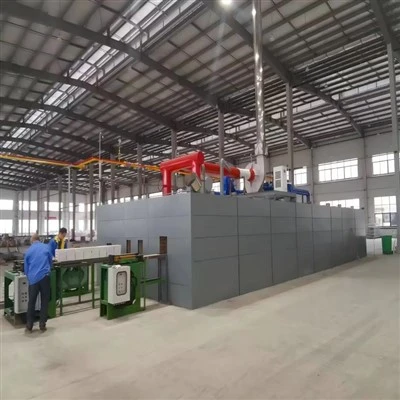
Feel free to reach out to connect on your kiln automation needs.
Ready To Assemble Kiln References
Industrial Kiln Automation: Trends, Benefits, and Challenges, Industrial Heating Magazine, 2023
Retrofit Opportunities for Industrial Kilns, Manufacturing Engineering Association, 2022
Quality Control in Automated Kiln Processes, Journal of Industrial Process Automation, 2024
Henan Yaxin Kiln Co., Ltd.
Henan Yaxin Kiln Co., Ltd. is one of the most professional industrial kiln manufacturers and suppliers in China. With abundant experience, we warmly welcome you to buy high quality industrial kiln with the latest design from our factory. Good service and punctual delivery are available.
Address: Jixian Industrial Zone, Shangqiu City, Henan Province
E-mail: 1543563178@qq.com
WebSite: https://www.hnyxkiln.com/
