If you’ve ever turned a steering wheel in a car, adjusted a heavy industrial valve, or watched a warehouse door slide open smoothly, you’ve likely benefited from a rack and pinion actuator—even if you didn’t know it. As a supplier focused on these components, I’ve spent years walking engineers, facility managers, and small business owners through why rack and pinion actuators are such a workhorse for so many applications. Unlike other linear actuation systems, which rely on hydraulics, pneumatics, or even complex electric motor setups, rack and pinion actuators use a simple gear-to-gear design: a rotating pinion gear meshes with a linear “rack” gear, converting rotary motion into precise linear movement (or vice versa, in some reverse-use cases). This design is durable, low-maintenance, and customizable, which is why it’s found its way into far more industries than most people realize. Rack And Pinion Actuator
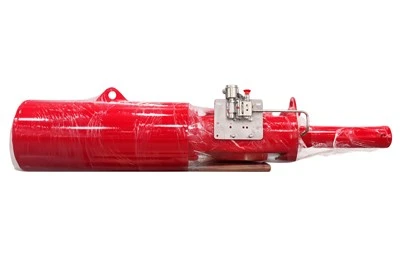
Let’s start with the industry where most people first encounter rack and pinion actuators: automotive. For decades, these components have been the backbone of power steering systems, and while electric power steering has grown in popularity, rack and pinion actuators remain the gold standard for many vehicles. The actuator here converts the driver’s slight rotary input on the steering wheel into the linear motion needed to move the car’s wheels left or right. But it’s not just passenger cars—commercial trucks, buses, and even recreational vehicles use heavy-duty rack and pinion actuators to handle the larger forces required to steer larger vehicles. I once worked with a fleet maintenance company that was replacing their old hydraulic steering actuators with rack and pinion models because the hydraulic ones leaked constantly, adding thousands of dollars in annual fluid and repair costs. The rack and pinion units they went with were sealed, required no fluid, and had a lifespan that was double their previous setups. That’s the kind of practical, cost-effective upgrade that makes rack and pinion actuators so popular in automotive spaces.
Next, the industrial sector—specifically, valve automation. If you’ve ever walked through a refinery, a water treatment plant, or a chemical processing facility, you’ll see thousands of valves controlling the flow of water, gas, oil, and chemicals. These valves can weigh hundreds of pounds, and manually operating them is impractical, dangerous, and slow. That’s where rack and pinion actuators come in. They’re ideal for quarter-turn valves—ball valves, butterfly valves, plug valves—because they deliver a 90-degree rotation (or exact linear movement) to open or close the valve completely. What I love about supplying these for industrial valves is their adaptability: we can build actuators that handle high-pressure environments, corrosive materials, and extreme temperatures, all while maintaining precise control. For example, a power plant’s cooling system relies on valves to regulate water flow; if a valve fails, the whole plant can shut down, costing millions in downtime. Rack and pinion actuators here are used to trigger emergency shutdowns automatically if pressure gets too high, and their simple design means they’re less likely to jam or fail unexpectedly. I’ve had plant managers tell me that switching from hydraulic to pneumatic rack and pinion actuators cut their valve repair time by 70% because the units are easier to inspect and replace during routine maintenance.
Warehousing and material handling is another huge space for rack and pinion actuators. Automated guided vehicles (AGVs) used to move pallets in large warehouses, sliding loading doors, and even conveyor belt systems all use these actuators. AGVs, which are the backbone of modern e-commerce fulfillment, need to move smoothly and accurately along fixed paths. A rack and pinion actuator attached to the AGV’s drive system gives it the linear motion to travel down aisles, while a rack mounted along the warehouse floor ensures the vehicle doesn’t drift off course. For loading doors, especially those that are large and heavy (some warehouse doors are 10 feet tall or more), rack and pinion actuators open and close them evenly, preventing warping and reducing wear on the door tracks. I recently worked with a 3PL company that was expanding their warehouse and needed to upgrade 20 loading doors; their old linear actuators would often bind in cold winter weather, delaying loading shipments. The rack and pinion units we provided have sealed gears that work in temperatures as low as -20°F, so they haven’t had any issues all year. That reliability is non-negotiable in material handling, where every minute of delay can cost a business in missed delivery deadlines.
Beyond those obvious industrial uses, rack and pinion actuators are also common in aerospace and defense applications, though these often require custom-built units. Aircraft landing gear, for example, uses actuation systems to extend and retract the gear during takeoff and landing. Rack and pinion actuators here are chosen for their high strength-to-weight ratio—critical for aircraft, where every pound saved improves fuel efficiency. Military vehicles, tanks, and armored trucks also use these actuators for steering, turret rotation, and door operation. What’s interesting about this sector is that the requirements are extremely specific: actuators need to withstand impacts, extreme heat from engine systems, and even exposure to saltwater if vehicles are deployed near coasts. As a supplier, we work closely with aerospace engineers to design actuators that meet military standards, with features like stainless steel gears and corrosion-resistant coatings. It’s a different challenge than supplying for automotive, but the core benefit of rack and pinion design remains the same: consistent, repeatable movement when you need it most.
Even in residential and commercial construction, you’ll find rack and pinion actuators, particularly in automated access systems. Automatic sliding doors in hospitals, office buildings, and retail stores use these actuators to open and close smoothly, with enough force to push through heavy traffic but enough precision to avoid pinching fingers. Garage door openers, especially commercial-grade ones for apartment buildings or storage facilities, also rely on rack and pinion systems because they can handle the weight of large doors without needing frequent repairs. I’ve had small business owners tell me that their automatic store doors stopped working regularly because the old linear actuators would wear out quickly from heavy use; switching to rack and pinion units cut their maintenance calls in half. For residential applications, some high-end motorized window treatments and retractable awnings use compact rack and pinion actuators to open and close, offering a quieter, more reliable alternative to chain-driven systems.
Now, let’s talk about what makes rack and pinion actuators stand out in all these applications. Unlike hydraulic actuators, which require oil lines and can leak, or electric actuators with complex motor assemblies, rack and pinion units have fewer moving parts, which means less to break. They’re also easy to mount and integrate into existing systems—whether you’re retrofitting a steering system in a small car or adding a valve actuator to a refinery’s control panel. They can be powered by pneumatics, electricity, or even manual input, making them versatile for different operational needs. For example, in areas with no access to compressed air, manual rack and pinion actuators let operators open valves by hand without extra power, a feature that’s critical in remote well sites or small processing plants.
Of course, like any component, rack and pinion actuators aren’t the right fit for every job. For very high-speed applications, some other actuation systems might be better, and for extremely long travel distances, belt-driven actuators often win out. But for most linear motion needs that require strength, durability, and precision, they’re hard to beat. Over the years, I’ve talked to hundreds of customers who initially thought their application needed a different type of actuator, only to realize a rack and pinion model would save them money on installation, maintenance, and replacement parts.

As a supplier, my job isn’t just to sell a component—it’s to help customers pick the right actuator for their specific use case. Whether you’re a fleet manager looking to upgrade your steering systems, a plant engineer needing reliable valve automation, or a warehouse operator expanding your material handling fleet, I can help you customize a rack and pinion actuator that meets your needs. We work with small businesses and large industrial facilities alike, offering flexible options for different budgets and performance requirements. If you’re dealing with a motion control challenge that’s been causing downtime or high repair costs, let’s connect to discuss how a rack and pinion actuator might be the solution you’re looking for.
Pneumatic Rotary Actuator References:
- Bosch, S. (2022). Automotive Actuation Systems: Design and Application. SAE International.
- Perry, R. H., & Green, D. W. (2008). Perry’s Chemical Engineers’ Handbook (8th ed.). McGraw-Hill Education.
- American Society of Mechanical Engineers (ASME). (2019). Actuation Systems for Industrial Applications. ASME Press.
- Aerospace Industries Association (AIA). (2021). Aircraft Actuation Technology Standards. AIA Publications.
- Material Handling Industry (MHI). (2020). Automated Guided Vehicle Design and Maintenance Guidelines. MHI.
Zhejiang Bigtork Valve Automation Co., Ltd.
Zhejiang Bigtork Valve Automation Co., Ltd. is one of the leading rack and pinion actuator manufacturers and suppliers in China. We warmly welcome you to buy customized rack and pinion actuator at competitive price from our factory. Contact us for more details.
Address: 98 Yuanqu Avenue,Anfeng Industrial Zone,Oubei,Yongjia,Zhejiang,China.
E-mail: sales@bigtork.com
WebSite: https://www.bigtork.com/
