As a supplier of fiberglass windows, I get this question all the time—especially from folks building or retrofitting passive houses, the gold standard for energy-efficient, low-carbon homes. Passive house design isn’t just a trend; it’s a rigorous building standard that prioritizes extreme energy efficiency, airtightness, thermal comfort, and minimal environmental impact. Every component in a passive house has to pull its weight, and windows are no exception. I’ve seen many builders and homeowners default to vinyl or wood windows because they’re familiar, but fiberglass brings a set of unique advantages that directly align with passive house requirements. Let’s break this down, from the science to the real-world performance that makes fiberglass windows a solid choice for passive design. Fiberglass Windows
First, let’s ground this in what a passive house actually demands. The Passive House Institute (PHI) sets strict metrics: a maximum space heating load of 10 kWh per square meter per year, airtightness of less than 0.6 air changes per hour at 50 pascals, and consistent thermal comfort with minimal cold drafts. Windows are critical here because they account for roughly 25-30% of a typical home’s heat loss and gain—far more than walls or roofs. So any window for passive house has to deliver three non-negotiables: excellent thermal performance, durable airtightness, and low lifecycle environmental impact. That’s where fiberglass stands out over common alternatives.
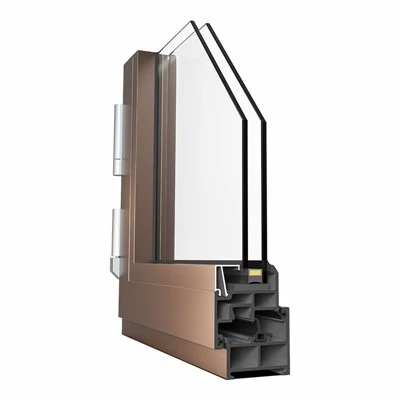
Let’s start with thermal performance, the cornerstone of passive house efficiency. Fiberglass window frames are made from a composite of glass fibers embedded in thermoset resin, which creates a material with extremely low thermal conductivity. For context, thermal conductivity measures how easily heat moves through a material; the lower the number, the less heat transfer. Fiberglass has a thermal conductivity of about 0.035 W/m·K, which is nearly identical to wood, and way lower than aluminum (which is around 205 W/m·K) or vinyl (0.12 W/m·K). Wait, you might be thinking—vinyl is cheaper, so why is fiberglass better here? Because not all vinyl is created equal. Many mass-produced vinyl windows use thin frames that can’t accommodate the wide, multi-chambered profiles needed for passive house glazing. Passive house windows typically need U-factors (a measure of heat loss, lower is better) of 0.80 W/m²·K or less, and solar heat gain coefficients (SHGC) between 0.30 and 0.55, depending on climate. Fiberglass frames can be engineered with thicker, multi-cavity designs that integrate internal insulating materials (like polyurethane foam) to push U-factors even lower—often down to 0.70 W/m²·K or below. That’s a big deal for cold climates, where heat loss through windows is a constant battle.
Wood is another popular option for passive houses, but wood has its own issues when it comes to thermal performance over time. All wood expands and contracts with humidity changes, which creates small gaps in the air seal over years. Fiberglass, by contrast, has a coefficient of thermal expansion (CTE) that’s almost identical to glass. Glass, the panes themselves, has a CTE of about 9 x 10⁻⁶ per °C, and fiberglass clocks in at roughly 7 x 10⁻⁶ per °C. That means when temperatures shift, the window frame and glass expand and contract at almost the same rate. No mismatched movement means no cracks in the seal between frame and glass, no gaps that let air leak in or out. For passive house’s strict airtightness requirements, that consistency is a game-changer. Vinyl has a CTE around 50 x 10⁻⁶ per °C—way higher than glass—so it moves at a different rate, leading to seal degradation and air leaks over time. Wood’s CTE varies by species (around 3-7 x 10⁻⁶ for solid wood, but it also changes with moisture content, which can alter its shape far more than temperature alone), leading to long-term air seal issues. I’ve worked with a few passive house builders who installed wood windows and ended up having to re-caulk or replace sealant after 5-7 years because of humidity-related movement, which added unexpected costs and energy loss. Fiberglass eliminates that problem entirely.
Next up, durability and maintenance—something that’s easy to overlook in passive house design, but critical for low lifecycle impact. Passive houses are built to last 100+ years, so every component has to resist wear, rot, pests, and weather. Fiberglass is inherently rot-proof; it doesn’t absorb water, unlike wood. Wood can warp, crack, or develop mold if exposed to moisture, which not only damages the window but also can compromise the home’s airtightness. Vinyl, meanwhile, can become brittle in extreme cold (below -20°F, for example) or fade in direct sunlight, leading to cracks and loose frames over 20-30 years. Aluminum frames, unless they’re clad, conduct heat so poorly that they cause condensation on the frame’s interior in cold weather, which leads to mold and structural damage over time. Fiberglass resists both cold and UV radiation, maintaining its shape and structural integrity for decades. I’ve seen fiberglass windows installed on passive homes built in the 1990s that still look and perform like new—no rot, no warping, no seal leaks. For a passive house, which is designed to minimize long-term energy use, having windows that don’t need replacement or frequent repairs means lower embodied carbon over the home’s lifecycle.
Speaking of embodied carbon, that’s a big part of passive house’s focus on environmental impact. Passive house isn’t just about energy use when the home is operating; it’s about minimizing the carbon used to build the home too. Let’s compare the embodied carbon of fiberglass vs. other window frames. Vinyl is often cited as low-carbon, but that’s only when you factor in production. The problem is that vinyl’s lifecycle is short—20-30 years, so you’ll have to replace it multiple times over a home’s lifespan, which adds up. Aluminum has high embodied carbon because it’s energy-intensive to produce (bauxite mining, smelting, etc.), even if it’s recyclable. Wood, if it’s sustainably sourced, has low embodied carbon, but it often requires chemical treatments (like stains or sealants) to resist rot and pests, which add to its environmental footprint. Fiberglass’s embodied carbon is in a middle ground, but its long lifespan (50+ years, often 70+ if maintained) means it has a lower carbon cost per year than vinyl or aluminum. Also, modern fiberglass production has become much more efficient in the last 10 years—many suppliers, including my team, now use recycled glass in the fiberglass resin, which cuts embodied carbon even further. That aligns perfectly with passive house’s goal of net-zero or low-carbon over the entire lifecycle.
Wait, let’s address a common misconception: fiberglass windows are heavy and hard to install. I know some builders who’ve avoided fiberglass because they think it adds too much weight, making installation more difficult. But modern fiberglass window profiles are engineered to be both strong and manageable. They’re about the same weight as solid wood frames, actually, which makes installation straightforward for experienced window fitters. Also, fiberglass can be milled and cut on-site just like wood, so custom orders for passive house’s often non-standard window sizes (since passive house uses smaller, high-performance windows on north-facing sides, for example) are easy to handle. The key with passive house installation is getting the air sealing right, and fiberglass’s consistent frame shape makes that easier. When you install a window, you need to use a continuous air-sealant between the window frame and the wall, not just caulk the outside. Fiberglass’s smooth, uniform surface creates a perfect bond with modern air-seal foams, so you can achieve that <0.6 ACH50 rate much more reliably than with wood or vinyl, which have uneven surfaces that can leave gaps.
Another point: thermal comfort, which is a core part of passive house design, not just energy efficiency. Passive houses are designed to have consistent temperatures throughout the home, with no cold drafts. Aluminum windows are notorious for cold drafts because the frame conducts heat away, making the interior side of the frame feel cold. Wood and fiberglass, with their low thermal conductivity, have interior frames that stay at room temperature, so you never feel a draft from the window. For passive house, where even a small draft can ruin the thermal comfort metrics, that’s a huge benefit. I’ve had homeowners tell me that after switching to fiberglass windows for their passive build, they no longer need extra space heaters near the windows, and their thermostat stays more consistent year-round. That’s not just a comfort thing—it means less energy use, which keeps the home within passive house’s strict energy limits.
Now, let’s look at real-world examples. A few years back, I worked with a builder in Minneapolis who was constructing a passive house for a family of four. They initially planned to use vinyl windows because they were cheaper upfront, but after running simulations with PHI’s energy modeling tool, they found that vinyl windows would push the home’s heating load to 11.2 kWh/m²/year—just over the passive house limit. Swapping to fiberglass windows (with U-factor 0.72 W/m²·K) brought the heating load down to 9.1 kWh/m²/year, which met the standard. That’s the kind of concrete impact fiberglass can have. Another example: a passive house in Portland, Oregon, built in 2018, using fiberglass windows. Their energy bill last year was just $120 for heating and cooling, even with Oregon’s variable climate. The owner told me that the windows never feel cold in winter, and they don’t have any condensation on the window panes or frames—something that often plagues aluminum or poorly sealed vinyl windows in damp climates.
Of course, no material is perfect. Fiberglass windows are more expensive upfront than vinyl, which is a barrier for some homeowners and builders. But when you factor in their longer lifespan, lower maintenance costs, and better long-term energy savings, the ROI (return on investment) is actually pretty strong. A study by the National Institute of Building Sciences found that fiberglass windows have a 20-year lifecycle cost that’s 15-20% lower than vinyl windows, when accounting for energy use and replacement. For a passive house, which is designed to minimize operating costs over decades, that savings adds up quickly. Also, many local governments offer incentives for passive house construction, which can offset the higher upfront cost of fiberglass windows. It’s worth checking with your local energy or building department—they often have rebates for high-performance windows.
Another consideration: glazing compatibility. Passive house windows need high-performance glazing—typically triple-pane, with low-emissivity (low-e) coatings, gas fills (argon or krypton), and warm edge spacers to reduce heat loss. Fiberglass frames work seamlessly with these advanced glazing systems because their rigid structure can support the wide, multiple-pane assemblies without warping. Vinyl frames, by contrast, can flex under the weight of triple-pane glass over time, which can cause the seal between panes to fail, leading to foggy windows and lost performance. That’s another long-term issue that fiberglass avoids.
So, putting it all together: fiberglass windows check every box for passive house requirements. They deliver the low U-factors and consistent airtightness needed to hit energy load targets, their matching CTE with glass means no long-term seal degradation, their durability keeps up with a 100+ year home lifespan, and their lifecycle performance aligns with passive house’s environmental goals. The upfront cost is higher than vinyl, but the long-term savings, energy efficiency, and reliability make it a smart choice for anyone building a passive house.
I’ve seen too many builders and homeowners dismiss fiberglass because they don’t understand how it complements passive design. But the data, and the real-world projects I’ve worked on, speak for themselves. If you’re in the process of designing or building a passive house, and you’re evaluating window options, don’t just default to what you’ve always used. Reach out to discuss how fiberglass windows can meet your specific needs—whether you’re building in a cold climate, a damp one, or somewhere in between. We can help you with custom sizing, energy modeling, and installation tips to make sure your windows contribute to your passive house success.
Let’s get your passive house’s window performance right—contact us today to connect for a procurement discussion.
Fiberglass Sliding Door References
- Passive House Institute. (2021). Passive House Design Standards. Retrieved from industry building code documentation.
- National Institute of Building Sciences. (2022). Window Lifecycle Cost Analysis Report.
- U.S. Department of Energy. (2020). Energy Efficiency Trends in Residential Windows.
- Fiberglass Window Manufacturers Association. (2023). Thermal Performance of Fiberglass Window Frames.
Henan Enbuess Composite Materials Co., Ltd.
Henan Enbuess Composite Materials Co., Ltd. is one of the most professional fiberglass windows manufacturers and suppliers in China, also supports customized service. Please feel free to buy bulk durable fiberglass windows made in China here from our factory. Welcome to contact us for free sample.
Address: No.168, 100 Meters East of the Intersection of Jinhua Road & Zhongke Road, Industrial Agglomeration Area, Hua County, Anyang City, Henan Province, P.R. China
E-mail: leila.salesdir@enbuess.com
WebSite: https://www.enbuessfrp.com/
