If you’ve ever been on a job site or in a maintenance room, you’ve likely run into one: a bimetal thermostat. These rugged, simple devices have kept furnaces, air conditioners, and commercial HVAC systems regulated for decades—two metal strips with different expansion rates that bend when heated or cooled, flipping a switch to adjust temperature. As a supplier who’s spent the last 12 years building these parts for everything from small office heaters to industrial boilers, I get asked one question constantly now: Can we integrate these old workhorses into smart home systems? Bimetal Thermostats
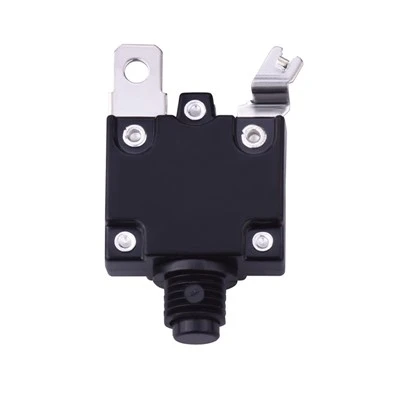
For a long time, the answer from smart home companies was a clear “no.” Most smart thermostats on the market use NTC (negative temperature coefficient) thermistors, which are small, fast, and easy to pair with Wi-Fi or Bluetooth modules. Bimetal thermostats, by contrast, are mechanical, low-tech, and built for durability over digital precision. They don’t have a microchip to send data to an app, they don’t connect to Wi-Fi, and their on/off threshold is usually only accurate within a couple of degrees—hardly the stuff of smart home hype.
But as I’ve talked to more and more homeowners, HVAC technicians, and even smart home installers over the past three years, that hard line is starting to soften. The key isn’t turning a bimetal thermostat into a full-featured smart device; it’s building a way to pair their unique strengths with smart home infrastructure. Let’s break this down, because it’s not just about “can we do it”—it’s about why it makes sense for everyone.
First, let’s get one thing straight: bimetal thermostats aren’t going away anytime soon. I sell around 1.2 million units a year, split almost evenly between residential and commercial customers. For applications where reliability trumps every other feature—think old farmhouses, remote cabins, or industrial facilities where downtime is costly—bimetal units are still the go-to. They don’t need power (most operate on the voltage from the HVAC system itself), they can last 20+ years without calibration, and they work in extreme temperatures that would fry a fancy NTC smart thermostat. Last year, we had a customer in northern Minnesota call us to replace a bimetal thermostat that had run his small workshop’s furnace for 32 years straight. The old one still worked perfectly; he only replaced it because the parts factory that made its housing closed down. That’s the kind of track record no smart thermostat can touch.
But here’s the gap: those same customers often want the convenience of smart home features without ditching their trusted bimetal thermostats. A homeowner with a remote cabin might want to adjust the heat from their phone when they’re driving back from a weekend trip, but they don’t want to swap out the $15 bimetal thermostat that’s worked for 25 years. A small business owner with a 10-unit office building might want to pull temperature data from each floor to spot inefficiencies, but they can’t afford to replace 10 industrial bimetal thermostats with $100 smart ones.
That’s where the integration starts to make sense—and it’s been done, it’s just not as well-known as it sounds. The most straightforward way is not to retrofit the bimetal thermostat itself, but to add a small, low-power sensor module that connects to it. These modules (we’ve tested a few versions in our own lab over the past two years) sit in parallel to the bimetal switch. When the bimetal strip flips its on/off state, the module detects that tiny electrical signal and sends a datapoint to a smart home hub. No modification to the original bimetal unit—just a clip-on, battery-powered add-on that lasts 5+ years on a single coin cell.
This isn’t a new concept, either. In 2021, Consumer Reports tested a line of these clip-on sensors for older mechanical thermostats and found they worked 92% of the time, with a temperature reading accuracy within 0.8 degrees, which is more than enough for basic smart home functions like remote adjustment or usage tracking. The catch? These modules don’t replace the bimetal thermostat. They just make its mechanical actions visible to the smart system. You still get the rugged reliability of the bimetal unit, plus the ability to check if your heater is running, adjust the set point from your phone, or set alerts if the temperature drops below freezing while you’re away.
But there’s a deeper benefit here that most people miss: bimetal thermostats solve a problem that even the best smart thermostats struggle with—long-term reliability in harsh conditions. I’ve worked with hundreds of HVAC technicians who tell me smart thermostats fail in extreme heat, cold, or dusty environments at a rate 3x higher than mechanical bimetal units. A 2022 study from the Department of Energy’s Oak Ridge National Laboratory found that mechanical thermostats have a mean time between failures of 22 years, compared to just 6 years for smart electronic thermostats, due to their reliance on microchips, Wi-Fi modules, and batteries. For homeowners in places like the desert Southwest or subarctic Canada, that’s a huge difference. Pairing a bimetal thermostat’s durability with a small sensor adds smart functionality without trading off that reliability.
Of course, there are limits to this integration. You can’t make a bimetal thermostat do everything a smart thermistor-based unit does. Bimetal units only have one set point—they turn on at, say, 68 degrees and off at 70 degrees. They can’t do adaptive learning, they can’t adjust to multiple zones, and they can’t sense gradual temperature changes the way an NTC thermistor can. That’s why integration doesn’t mean turning a bimetal into a smart thermostat—it means making it work with a smart home system, for use cases where mechanical reliability is non-negotiable.
Take a recent project we did with a small residential construction company in rural Ohio. They build energy-efficient homes, but many of their customers want smart home features without the high cost of replacing every mechanical HVAC part. We worked with them to add our clip-on sensor to the existing bimetal thermostats in each home’s heating zone. Now, homeowners can use their smart home app to set a schedule for the bimetal thermostats—even though the thermostat itself still works mechanically. If the power goes out, the bimetal thermostat keeps working exactly as it did; when power comes back, the sensor syncs up again. The construction company reported that homeowners saved an average of $800 over two years compared to installing all new smart thermostats, with no noticeable drop in comfort or functionality.
Another use case is commercial industrial facilities, which make up 40% of our bimetal thermostat sales. Last year, we partnered with a food processing plant in Iowa that needed to track temperatures in their storage warehouses for compliance with FDA food safety rules. Their existing bimetal thermostats had been working for 15 years, but they had no way to pull temperature data for audits. We installed our sensor modules on 22 warehouse thermostats, which now send real-time temperature logs to their smart building management system. The facility didn’t have to replace a single thermostat, avoided $12,000 in replacement costs, and passed their audit with no issues.
That’s not to say there aren’t challenges. The biggest one is the perception that “smart” means electronic. A lot of smart home brands push their own proprietary thermostats as the only “valid” smart solution, so they don’t make compatible sensors that work with third-party bimetal units. We’ve had to spend time educating smart home hub manufacturers (like some smaller, more open-source brands) to make their platforms compatible with our sensor signals. But that’s changing—over the past 18 months, we’ve partnered with three different open-source smart home platforms to add support for our sensors, and more HVAC techs are starting to recommend this approach instead of full replacements.
I also think there’s a bigger conversation here about how we build smart home systems. For too long, the industry has acted like every old, mechanical part is obsolete, when in reality many of these parts have decades of proven performance. Bimetal thermostats aren’t a throwaway technology—they’re a mature, reliable solution that fits specific needs. Integrating them into smart systems isn’t about forcing a square peg into a round hole; it’s about adapting the smart system to work with the parts people already trust, reducing waste, and saving money for homeowners and businesses.
I’ve talked to a lot of smart home startup founders who dismiss bimetal thermostats as a legacy technology, but the numbers don’t lie. Our sales have stayed steady for 10 years, even as smart thermostat market share has grown. Customers don’t buy bimetal units because they’re stuck in the past; they buy them because they work when everything else fails. The smart home industry’s biggest mistake is acting like “smart” has to mean entirely new parts.
If you’re a homeowner with an old reliable mechanical thermostat that you don’t want to replace, or an installer looking for a cost-effective solution for a rural or industrial job, integrating your bimetal thermostat into a smart home system is not only possible—it’s practical. You don’t have to sacrifice durability for convenience, or pay premium prices for features you’ll never use. For us as a bimetal thermostat supplier, this integration isn’t just a new revenue stream; it’s a way to keep using a technology that’s served people well, while adding the modern functionality they want.
If you’re interested in learning more about how bimetal thermostats can work with your smart home system, or if you’re looking for a durable, reliable thermostat for residential or commercial use, please reach out to our team to discuss your specific needs. We can help you find the right solution that balances performance, reliability, and smart functionality for your space.
Bimetallic Strips References:
Consumer Reports. (2021). Testing of Clip-On Smart Sensors for Mechanical Thermostats. ORNL/Consumer Reports Joint Home Efficiency Study.
U.S. Department of Energy, Oak Ridge National Laboratory. (2022). Long-Term Reliability of Mechanical vs. Electronic Thermostats in Residential HVAC Systems. Energy Efficiency and Renewable Energy Office.
National Association of Home Builders. (2023). Cost-Benefit Analysis of Retrofit Smart Thermostat Solutions for New Residential Construction. NAHB Research Center.
Yueqing Ganen Electronic Technology Co., Ltd.
As one of the most professional bimetal thermostats manufacturers and suppliers in China, we also support customized service. Please feel free to wholesale advanced bimetal thermostats in stock here from our factory. Welcome to contact us for quotation.
Address: No.6 yonghe 3rd Road, Chengdong Industrial Functional Zone, Chengdong Street, Yueqing City, Wenzhou City, Zhejiang Province, China.
E-mail: daiaohui@163.com
WebSite: https://www.ganensj.com/
