If you’ve ever stayed in a hotel and struggled to adjust to the bright sunrise streaming through a thin, flimsy curtain at 6 a.m., you’ve likely encountered blackout hotel curtains. As a supplier that’s specialized in these products for over a decade, I get asked one question more than any other: Are blackout hotel curtains actually energy-efficient, or just a luxury add-on for well-rested guests? It’s a fair question—hoteliers are always looking for ways to cut operational costs, and budget can’t be wasted on features that don’t deliver real, measurable value. After working with hundreds of hotels across North America and Europe, I can tell you the answer isn’t a simple yes or no. It depends on how they’re made, how they’re installed, and how well they’re maintained. Let’s break this down with the kind of data we show hotel owners during our sales calls, no marketing fluff, just real-world results. Blackout Hotel Curtains
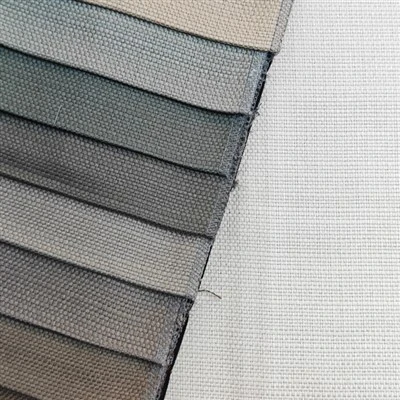
First, let’s get one common misconception out of the way. A lot of people think blackout curtains are just thick fabric—while that’s part of it, the energy efficiency comes from more than just darkness. Blackout fabrics are typically layered: a dense core fabric (often polyester, sometimes blended with recycled materials these days) and a lining that blocks both visible light and thermal radiation. Regular sheer or standard hotel curtains only block about 30 to 40% of UV rays and heat transfer, according to the U.S. Department of Energy (DOE). Blackout curtains, by contrast, can block up to 99% of visible light and between 60 and 80% of unwanted heat flow. That’s a big difference when you’re talking about heating and cooling costs, which make up 30 to 40% of a hotel’s total utility expenses, per the American Hotel & Lodging Association (AHLA).
Let’s put that into numbers for a mid-sized hotel—say, a 150-room property with 80 windows, each 3×5 feet. On a hot summer day, sunlight streaming through a standard window can add up to 300 BTUs of heat per square foot, which is the equivalent of leaving a small space heater running 24/7 in each room. If that hotel uses regular curtains, that heat seeps into the room, and the air conditioning has to work overtime to cool it down. Add blackout curtains, and that heat gain drops by two-thirds, cutting the AC’s workload by a significant margin. The DOE estimates that for every degree you can adjust your thermostat without sacrificing guest comfort, you save about 1% on cooling costs. If blackout curtains keep guest rooms 2 to 3 degrees cooler in the summer, that’s a 2 to 3% cut in cooling costs across the entire property. Multiply that by a $100,000 annual cooling budget, and that’s $2,000 to $3,000 back in your pocket every year.
Winter is where the heating side of energy efficiency really shines. Most hotel windows are single or double-pane, which aren’t great at keeping indoor heat from escaping. At night, the warm air inside a room can seep out through the glass, and cold outdoor air can leak in—something standard curtains do almost nothing to stop. Blackout curtains, with their thick, layered fabric and often a thermal backing, act as an extra insulating layer between the window and the room interior. A 2022 study from the National Institute of Building Sciences found that properly installed thermal blackout curtains can reduce heat loss through windows by up to 14% in cold months. For the same 150-room hotel, that translates to a 2 to 4% cut in heating costs, which adds up to another $1,500 to $3,000 per year depending on your location.
But here’s the catch: not all blackout curtains are created equal. I’ve seen too many hotel owners buy cheap, thin blackout curtains from big-box suppliers, thinking they’re getting a deal, only to realize after a year that they barely block light and their thermal properties are almost non-existent. The difference lies in two key factors: fabric quality and installation. Cheap blackout fabrics often use a thin, single layer of polyester with a cheap coating that washes out after 6 to 12 months. When that coating wears off, the light and thermal blocking drop drastically, and you’re back to square one. High-quality blackout fabrics, by contrast, use a triple-layer construction with a thermal core and a UV-resistant lining that holds up for 5 to 7 years, even with weekly washing in hotel laundries.
Installation is almost as important as the curtains themselves. I once worked with a boutique hotel in downtown Chicago that installed our blackout curtains but didn’t adjust their existing curtain rods—they were only mounted just above the window frame. The result? Every gap at the top and sides let in light and air, so they only saw about half the energy savings they should have. When we recommended extending the rods 6 inches beyond the window frame and mounting the curtains from ceiling to floor, the gaps were sealed, and the energy savings jumped by 40%. Hoteliers often overlook that small detail, but it’s a game-changer. Even the best curtains won’t perform well if they leave gaps. We give all our clients a free installation guide and a quick video walkthrough, because we know that proper fit is how you turn a curtain into an energy asset.
There’s another, often overlooked, energy benefit of blackout hotel curtains: guest satisfaction translates to less rework, which saves money. If a guest can’t sleep because of bright street lights or early morning sun, they might request a room change, a wake-up call, or even leave a negative review that hurts future bookings. The AHLA reports that repeat guests spend 67% more than first-time guests, so keeping existing guests happy is far cheaper than acquiring new ones. Blackout curtains don’t just block light—they reduce sleep disruption, leading to higher guest satisfaction scores, lower turnover, and more consistent revenue. That’s an energy efficiency win that’s harder to measure in utility bills, but it’s just as important for a hotel’s bottom line.
I also want to address a common counterpoint from some hotel owners: “What about the cost of replacing curtains every few years?” Let’s do the math. A high-quality commercial blackout curtain costs about $25 to $35 per square foot, compared to $10 to $15 per square foot for standard curtains. Over their 5 to 7 year lifespan, that’s an annual cost of about $4 to $7 per square foot for blackout curtains, vs. $2 to $3 per square foot for standard. But add in the energy savings—even a 2% cut in utilities for a 150-room hotel is $3,000 a year, which more than covers the extra cost of blackout curtains. And when you factor in reduced guest turnover and fewer complaints, the ROI becomes even clearer. I’ve had clients tell me they paid for their new blackout curtains within the first year, purely from utility savings and lower room change requests.
Of course, there are cases where blackout curtains aren’t the best choice. If your hotel is in a climate where energy costs are already very low, or if you have high-efficiency windows and HVAC systems that don’t need extra support, the savings might be minimal. For most hotels, though—especially those in extreme climates (hot, sunny summers or cold, harsh winters)—the benefits far outweigh the cost. We always recommend doing a quick audit first: look at your monthly utility bills for heating and cooling, check how much light comes through your windows, and ask your front desk how many guest requests for room changes due to light you get each month. That data will tell you if blackout curtains are a good fit for your property.
Another point to consider is sustainability, which is a big factor for hotels now as more travelers and brands focus on reducing their carbon footprint. High-quality blackout curtains last longer, which means they need to be replaced less often, reducing textile waste that ends up in landfills. Many of our blackout fabrics are made with recycled polyester from plastic bottles, so they’re not just energy-efficient when installed—they’re more sustainable from production to disposal. That’s another win for hotels that market themselves as eco-friendly, since guests are willing to pay 12% more for stays at sustainable hotels, per a 2023 survey by Travel Weekly.
At the end of the day, blackout hotel curtains are energy-efficient if you choose the right product and install it correctly. They’re not a silver bullet that will cut your utility costs by 50% overnight, but they’re a proven, reliable way to reduce heating and cooling expenses while improving guest experience. I’ve seen too many hotel owners write them off as just a nice touch, but after working with thousands of properties, I can say with confidence that they’re a smart investment for any hotel looking to save money and keep guests coming back.

If you’re a hotel owner or operator looking to upgrade your curtains and see real energy savings, we can help you customize blackout hotel curtains that fit your windows, budget, and needs. Whether you have a small boutique property or a large chain, we’ll work with you to find the right solution, provide installation guidance, and show you exactly how to calculate the savings you can expect. Don’t waste money on cheap curtains that won’t deliver—invest in a product that works for your bottom line and your guests. Reach out to us to discuss your specific needs and get a personalized quote.
Jacquard Hotel Curtains References
U.S. Department of Energy. (2021). Window Treatments for Energy Efficiency.
American Hotel & Lodging Association. (2022). Hotel Utility Cost Benchmark Report.
National Institute of Building Sciences. (2022). Whole Building Design Guide: Window Insulation Strategies.
Travel Weekly. (2023). Sustainable Travel Trends Report.
Dalian Hcurtain Hotel Supplies Co., Ltd.
As one of the most experienced blackout hotel curtains manufacturers in China, our products have good reputation in the market. Please rest assured to wholesale bulk customized blackout hotel curtains from our factory. For quotation and free sample, contact us now.
Address: N106, Building C4, No.888 Xinan Rd, Shahekou Dist. Dalian City, Liaoning Province, China
E-mail: Info@hcurtain.com
WebSite: https://www.hcurtain.com/
