Hey there, if you’ve ever spent time picking materials for a project—whether it’s a custom industrial filter, a trendy kitchen backsplash, or a vent that needs to balance airflow and strength—you’ve probably stared at two similar options: perforated metal and wire mesh. As a perforated metal supplier, I get it; it’s easy to mix these two up at first glance. Both are open, lightweight, and way more flexible than solid steel, but they’re built totally different, work for totally different jobs, and picking the wrong one can turn a quick project into a headache. Let’s break this down like we’re geeking out over materials at a trade show, no boring textbooks allowed. Perforated Metal
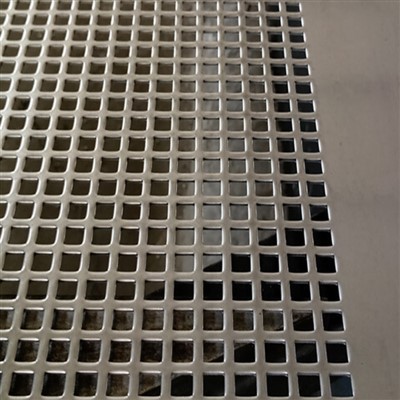
First off, let’s get the basics straight so we’re not talking past each other. Perforated metal is exactly what it sounds like: a solid sheet of metal (usually steel, aluminum, copper, even stainless steel) that we punch, drill, or laser-cut with consistent, shaped holes. Those holes can be round, square, slotted, hexagonal, even weird custom shapes if you need ‘em—all evenly spaced, no messy strands sticking out. Wire mesh, on the other hand, is made by weaving thin metal wires together, kind of like a fabric. The gaps are the spaces between the wires, not holes cut into a solid sheet. That’s the core difference, and it’s what drives every other comparison.
Let’s start with durability, because that’s non-negotiable for most of our clients. I’ve had builders call me panicking because their old wire mesh fence rotted out in two years, or an HVAC tech complain that his wire mesh vent got crushed by falling duct parts. Wire mesh is great for some things, but it’s way more fragile than perforated metal. The woven wires are held together at their intersections, but that bond can weaken over time, especially if you’re dealing with heavy abrasion, extreme temps, or corrosive stuff (like salt air for a marina, or chemical fumes for a factory). If you ever step on a wire mesh walkway, you’ve probably felt it give a little, right? That’s the flex—those wires aren’t solid, so they bend and wear thin way faster.
Perforated metal, though? It’s a solid sheet with holes cut through it, so it doesn’t flex or stretch the way mesh does. It’s way stiffer, more resistant to impact, and if it’s made from the same gauge (thickness) of metal as a mesh, it’ll outlast mesh by years, maybe even decades. Last year I supplied perforated aluminum panels for a parking garage facade in Miami—salt air and harsh sun, no problem, they still look as good as the day we installed ‘em. Wire mesh would’ve rusted through in a couple seasons out there, easy. That said, perforated metal isn’t unbreakable—if you hit it hard enough with a sledgehammer, it’ll dent, same as any metal. But for everyday wear and tear, it’s the clear winner here.
Next up, airflow and filtration, because that’s where people really start to care about the details. Let’s be clear: both let air, liquid, or particles pass through, but their performance is totally different. Wire mesh has way more open area than most perforated metal of the same “hole size.” Wait, let’s test that—if you have a wire mesh with 1mm gaps between wires, its open area is like 80-90% of the total surface. A perforated metal sheet with 1mm round holes? Its open area is more like 20-30%, tops, unless you space the holes really far apart. That’s a huge gap for things that need maximum airflow, like a fan guard or a greenhouse vent. If you need air to move through fast, without much restriction, wire mesh is usually better here.
But wait—filtration and consistency? Perforated metal takes the cake. With perforated metal, the holes are precise, uniform, and shaped exactly how you want ‘em. If you’re filtering out particles that are exactly 2mm big, you can get a perforated sheet where every hole is 2mm, so you don’t get weird gaps where tiny particles slip through or extra big holes that let unwanted stuff pass. Wire mesh’s gaps, though? They can be inconsistent. Wires have slight thickness variations, the weave can be off, so the gaps might be a little bigger or smaller in different spots. That’s not a big deal for a screen door, but if you’re filtering pharmaceutical ingredients or separating coffee grounds, precision matters. Also, if you’re dealing with liquids, perforated metal’s smooth, hole-through-a-sheet design means less residue gets stuck in the holes—wire mesh’s woven gaps trap stuff way easier, so it clogs up faster, especially with thick liquids. I had a food processing client switch from wire mesh to perforated stainless steel filters last year, and they cut their cleaning time by 40%—no more gunk stuck in every weave gap.
Now, versatility in applications—this is where a lot of people get tripped up, because both have totally different use cases. Let’s run through common projects to make this real.
If you’re doing a decorative project—like a restaurant backsplash, a store shelf display, or a fence that looks modern—perforated metal is my go-to. Why? Because it’s customizable. You can get it in different hole shapes and sizes to match your design: small round holes for a subtle, textured look, slotted holes for a linear, industrial vibe, even custom star shapes for a fun retail space. It’s also easy to finish—we can powder coat it, polish it, or leave it raw for an industrial look, and the finish sticks way better to a solid sheet than to woven wire mesh, which has all those little gaps where powder can build up or chip. A lot of architects I work with pick perforated metal for facade cladding too—its stiffness means it doesn’t warp when you install it on big building sides, and it holds up to weather way better than mesh.
Wire mesh, though, is the king of flexible, lightweight stuff. If you need a big, lightweight screen for a garden, a pool fence, or a temporary construction barrier? Wire mesh is way cheaper and easier to work with than perforated metal. It’s lightweight, so you can cut it with regular tools without needing heavy machinery, and it’s bendable—you can shape it into curves or rolls, which perforated metal can’t do easily (it’ll crack if you bend it too far). I’ve also seen wire mesh used for security cages or animal enclosures, because you can’t bend a perforated sheet into a tight curved space without a lot of work.
Wait, but what about when people ask for something in between? Like, a vent that needs some airflow but also some precision? Well, that’s where you pick based on your priority. If airflow is king, wire mesh. If consistency and durability are more important, perforated metal.
Now, let’s talk about cost, because that’s always a factor. I get calls all the time from clients who say, “Wire mesh is cheaper, right?” Most of the time, yeah—wire mesh is usually less expensive upfront, especially for big rolls. But you have to look at total cost, not just the initial price. Like, that cheap wire mesh fence you bought last year? You’ll have to replace it in 3 years because it rusted. The perforated metal fence? It’ll last 20 years, no problem. For filters, that $50 wire mesh filter that clogs every month means you’re spending $600 a year on replacements, while the $100 perforated metal filter might last 5 years. So upfront cost is lower for mesh, but long-term, perforated metal saves you cash.
But hold on—don’t write off wire mesh entirely. It’s perfect for its own niche. If you’re building a bird feeder, a sifter for flour, or a temporary barrier, mesh is the right call. I’ve turned down jobs for perforated metal when the client just needed a quick, cheap mesh screen—there’s no sense in charging them more for something they don’t need.
Wait, let’s address a common mistake I see people make all the time: mixing them up for the same job. A while back, a client came to me asking for a “perforated metal filter” for their aquarium. They’d ordered wire mesh online, and it was letting tiny bits of gravel pass through. The weave gaps were inconsistent, so some were bigger than the gravel they were trying to filter out. I sent them a small perforated stainless steel filter with uniform 3mm holes, and it fixed the problem immediately. That’s the kind of avoidable headache that comes from not knowing the difference.
Another client: a boutique hotel that wanted a modern metal ceiling for their lobby. They originally went with wire mesh because it was cheaper, but when the panels were installed, they stretched and sagged under their own weight. Perforated metal is rigid enough to hold its shape, so we swapped theirs out, and the ceiling has been perfect for two years now.
So, when do you pick which one? Let’s make a quick cheat sheet for anyone who’s unsure:
Pick perforated metal if:
- You need something durable that will hold up to impact, abrasion, or weather long-term
- You need precise, consistent holes for filtration, separation, or safety
- You want a clean, smooth finish for decorative or architectural projects
- You need something that won’t clog easily or hold residue
Pick wire mesh if:
- You need maximum airflow or open area for things like vents, screens, or greenhouse panels
- You need something lightweight, flexible, and easy to cut or shape
- You’re on a tight budget for a temporary or low-stakes project
- You don’t need precise hole sizes, just gaps between wires
At the end of the day, neither is better than the other—they’re just built for different jobs. As a perforated metal supplier, I love when clients come to me with their project details, because I can help them figure out if my product is the right fit, or if mesh would work better. I’d rather send a client to a mesh supplier than sell them something that’s gonna fail on their job. That’s how you build long-term relationships, right?

If you’re working on a project and you’re not sure which one to go with, hit me up. I can walk you through hole sizes, metals, finishes, whatever you need. No sales pitch, no jargon, just honest advice. We can talk specs, get you samples, and figure out exactly what works for your needs.
Flattened Expanded Metal References:
- Ashby, M. F., & Johnson, K. (2013). Materials Selection and Design. Butterworth-Heinemann.
- Perforated Metal vs. Wire Mesh: A Comparative Guide for Industrial Applications. (2022). Metal Fabrication Journal.
- Environmental Resistance of Woven vs. Perforated Metals. (2021). Journal of Materials Engineering and Performance.
Anping Yilida Metal Wire Mesh Co., Ltd.
Anping Yilida Metal Wire Mesh Co., Ltd. is one of the most reliable perforated metal manufacturers and suppliers in China, also supports customized service. Please feel free to buy bulk high quality perforated metal made in China here from our factory.
Address: Wire Mesh Development Zone, Anping, Hebei Province, China
E-mail: sales@wiremesh-yg.cn
WebSite: https://www.yilidametal.com/
