If you’ve ever sat in a car on a rainy day and not had to worry about the radio cutting out, the lights flickering, or the dashboard glitching when you hit a pothole, you can thank auto connectors. These tiny, unassuming parts are everywhere under the hood, inside the door panels, and even hidden in the seats—they’re what carry power and data between every component in your vehicle, from the battery to the infotainment system. But if there’s one thing that keeps them from becoming a fire hazard, or worse, frying your car’s entire electrical system, it’s something that most drivers never even notice: electrical insulation. As someone who’s been supplying auto connectors for over a decade, I’ve seen first-hand how insulation isn’t just a “extra step” in making a connector—it’s the make-or-break part that keeps cars safe and reliable. Auto Connector
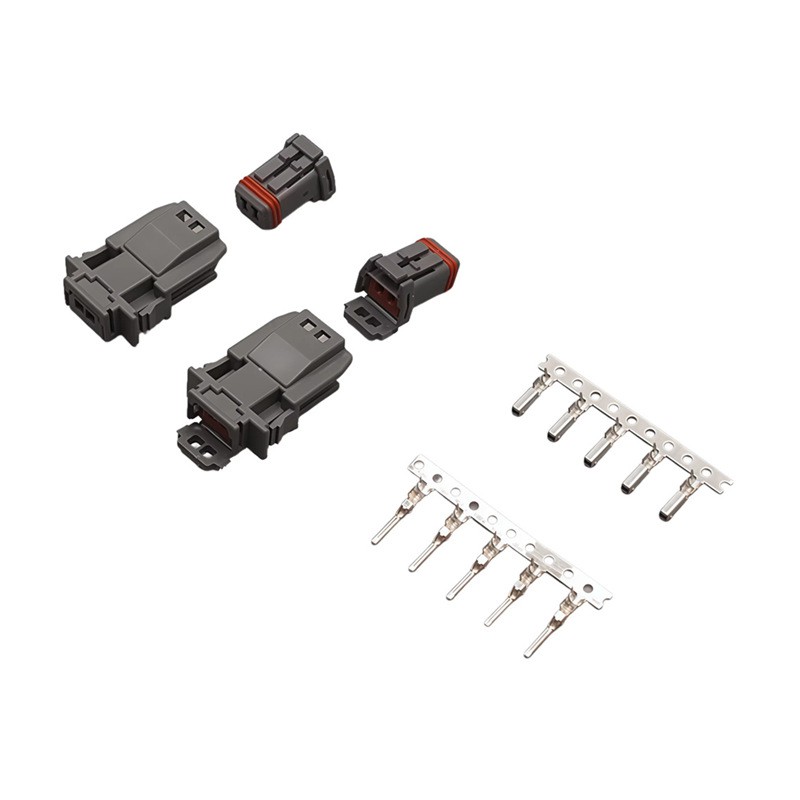
Let’s start with the basics, because when people ask me how we get insulation right, I like to break it down like I’m explaining it to a new tech who just joined our shop. Auto connectors are made of two core parts, right? The conductive parts—usually brass or copper pins and sockets that actually carry the current—and the non-conductive parts, which are the insulation. But it’s not just slapping a plastic cover on a metal pin and calling it a day. Modern cars have way more electrical stuff than they did even 10 years ago: electric power steering, advanced driver-assistance systems (ADAS) sensors, infotainment with multiple screens, and even electric vehicles that run entirely on batteries. That means the current moving through those connectors isn’t just the 12V from a old gas car—it’s hundreds of volts in EVs, plus sensitive data signals that can get messed up if they even touch a nearby wire. So insulation has to do three big things: keep the current where it’s supposed to be, block it from touching anything it shouldn’t, and hold up to the brutal conditions under the hood that would make a flimsy plastic crack in no time.
First off, the materials we use for insulation are non-negotiable. I’ve worked with connectors that used cheap, off-brand plastic that crumbled after two years of heat and cold, and trust me, that’s a nightmare for everyone. At our supply company, we only use materials that are made specifically for automotive use—think things like nylon (often reinforced with glass fiber, so it’s strong), polybutylene terephthalate (PBT), and cross-linked polyethylene (XLPE). These aren’t just random plastics. They have to withstand extreme temperatures—like, from -40°F in northern winters up to 250°F under the hood on a hot summer day. They also have to resist oil, coolant, road salt, and all that gunk that drips or splashes under cars. Nylon, for example, isn’t just cheap and easy to mold—it’s resistant to most automotive fluids and doesn’t absorb moisture, which is a big one. If a connector absorbs water, that moisture can create a tiny path for current to leak, which ruins insulation. PBT is even better for heat stability, so we use that for connectors that are near the engine, where temperatures are highest. For high-voltage connectors in EVs, we step it up to XLPE, which is super durable and can handle those 400V or 800V systems without breaking down.
But it’s not just the material itself—it’s how we shape it and install it around the conductive pins. This is where things get really specific, and where a lot of cheap suppliers cut corners. Every connector has a housing (that’s the plastic part that holds all the pins) and seals, right? The housing isn’t just a box to hold pins in place—it’s the first line of insulation. We mold the housing so that every pin is separated by tiny walls of plastic, called septa. Those septa have to be thick enough to keep two adjacent pins from touching, even if the connector gets jostled. For example, in a small connector that carries low-voltage signals, the septa might be 0.5mm thick, but for high-voltage connectors, we make them thicker—like 2mm or more—because the voltage is high enough that even a tiny gap could cause a short circuit. That’s not just random; we follow SAE standards, which are the industry guidelines for automotive parts, and we test every housing to make sure those walls don’t flex or crack when the connector is mated and unmated thousands of times.
Then there’s the sealing part. Water and dirt are two of the biggest enemies of insulation, because they can bridge the gap between two pins, even if the housing walls are perfect. So every connector that’s going to be exposed to the elements has seals around the edges of the housing, where wires come out, and sometimes even between the mating faces of two connectors. We use two types of seals usually: rubber seals, made of EPDM (the same stuff used for car window trim) and silicone. EPDM is great for resisting oil and ozone, so we use that for under-hood connectors, while silicone works better for extreme temperatures, which is why we use it for EV high-voltage connectors that get really hot. These seals have to be precise—no gaps, no extra material that could get in the way of mating, and they have to stay flexible for the life of the car. A lot of cheap suppliers use seals that harden after a couple years, which leaves gaps for water to get in, and that’s when you get short circuits. We test our seals by blasting them with water at high pressure (like the kind you use to wash your car) and leaving them in salt spray for hundreds of hours to make sure they don’t fail.
Another thing that’s super important is something called “creepage distance” and “clearance distance.” Wait, I know those sound like jargon, but they’re actually easy to explain. Clearance distance is the straight-line gap between two conductive parts, like two pins in a connector. Creepage distance is the distance along the surface of the insulation between those two parts, like the path a spark would have to take along the plastic housing. For high-voltage connectors, these distances aren’t just guesses—they’re regulated by ISO and SAE standards, based on how much voltage the connector carries. For example, a 12V connector might only need a clearance of 0.5mm and creepage of 1mm, but a 400V EV connector needs a clearance of at least 4mm and creepage of 8mm. That’s to make sure that even if there’s a tiny bit of dirt or moisture on the surface of the housing, there’s not enough space for electricity to jump across. I’ve seen a lot of suppliers cut these distances to save material, and that’s a huge safety risk—if a pin gets dirty or the connector gets scratched, those short circuits start happening, and that’s how you get things like dead batteries, or even electrical fires.
Wait, let’s talk about something that’s not just static insulation, too—when connectors are mated and unmated thousands of times over the life of a car, the insulation has to hold up. That’s called “insertion and withdrawal cycles,” and every time you plug a connector in, the pins slide into sockets inside the housing, which rubs against the insulation. If the insulation is soft or not properly molded, it can wear down, expose the pin, and cause a short. We test every connector to make sure it can go through at least 1,000 mating cycles, and some of our heavy-duty connectors for commercial vehicles can go through 10,000 cycles without the insulation wearing down. That’s why we use reinforced materials—glass-filled nylon, for example, is much more scratch-resistant than regular plastic, so it doesn’t get scraped or worn when you’re connecting and disconnecting it (like when a mechanic works on a car’s electrical system).
Oh, and don’t forget about temperature cycling! Under the hood, it goes from freezing in the morning to blazing hot by midday, and every time the temperature changes, the plastic housing expands and contracts a little bit. If the insulation material doesn’t have the right coefficient of thermal expansion, it might crack when it gets cold, or warp when it’s hot, which breaks the insulation between pins. We test all our connectors by putting them in a chamber that goes from -40°F to 250°F, hundreds of times, to make sure the insulation doesn’t crack, warp, or lose its shape. I’ve seen connectors from overseas suppliers that failed this test after 10 cycles, which is why we do all our own in-house testing (and third-party testing too, just to be safe) before any connector leaves our warehouse.
Let me give you a real example of why this matters. A few years back, we got a call from a small EV manufacturer that was having issues with their battery connectors shorting out in cold, snowy climates. Their old supplier used cheap nylon for the housing, which absorbed moisture and cracked, and their seals hardened after a year. We swapped them to our glass-filled PBT housing and EPDM seals, and also increased the creepage and clearance distance by 2mm, per their high-voltage system. They didn’t have a single failure after that, even in places like Minnesota where temperatures drop to -20°F in the winter. That’s the kind of thing that makes all the work worth it—knowing that our connectors are keeping cars safe, not just working.
I also want to mention something that a lot of people don’t think about: insulation for low-signal connectors. The connectors that carry data, like the ones for ADAS cameras or infotainment screens, don’t carry high voltage, but they’re super sensitive. Even a tiny amount of leakage current, or a short between two adjacent signal lines, can cause the camera to glitch or the ADAS system to not work. So for those, we use even more precise insulation—sometimes with specially designed septa that are shaped to prevent crosstalk, which is when one signal line interferes with another. That’s part of insulation too, right? Not just blocking current, but keeping the signals separate so they work correctly.
Now, I know a lot of people might think “why does this matter to me if I’m buying a car?” But as an auto connector supplier, our job isn’t just to sell parts—it’s to make sure that when a car comes off the assembly line, every connector works as it should for 10, 15, even 20 years. Insulation is the unsung hero of that. It’s not flashy, it doesn’t have a brand name on it, but it’s what prevents fires, keeps your car’s systems working, and makes sure you don’t get stranded on the side of the road because a connector shorted out.
If you’re a car manufacturer, a mechanic, or even a parts buyer looking for reliable auto connectors that have rock-solid electrical insulation, we’ve got you. We’ve been in this business for years, we test every single part we make, and we use only the best materials that meet or exceed all industry standards. We work with all types of vehicles, from gas-powered cars to EVs, and we can customize connectors for whatever application you need. Whether you need a small low-voltage connector for the dashboard or a big high-voltage connector for a battery pack, we make sure the insulation is done right, no cutting corners, no cheap materials.
If you’re ready to talk about your connector needs, get in touch with our team. We can walk you through all the options, answer any questions you have about insulation or any other part of auto connectors, and give you samples to test for yourself. Don’t settle for parts that might fail down the line—insulation is too important to mess around with.
Automotive Connector References:
- SAE International. (2022). Standard J1128: Performance Requirements for Automotive Wire and Cable Insulation.
- ISO 6469-3:2019. Electrically propelled road vehicles — Safety specifications — Part 3: Protection of persons against electric shock.
- Underwriters Laboratories (UL). (2021). UL 94: Standard for Tests for Flammability of Plastic Materials for Parts in Devices and Appliances.
- Automotive Industry Action Group (AIAG). (2020). Advanced Product Quality Planning (APQP) and Control Plan Handbook.
- Decker, R. F. (2019). Plastics for Automotive Applications: Materials, Processing, and Performance. Society of Plastics Engineers.
Wenzhou JKUN Connector Co., Ltd.
As one of the most professional auto connector manufacturers and suppliers in China, we’re featured by quality products and low price. Please rest assured to wholesale bulk customized auto connector from our factory. For quotation and free sample, contact us now.
Address: No.2667, Ningkang East Road, Yueqing City, Zhejiang Province, China
E-mail: sales@cnjkun.com
WebSite: https://www.jkunjcj.com/
