Hey there, fellow plumbers, pipe fitters, and anyone who’s ever stared at a wonky pipe elbow in the middle of a project and thought, “Wait—did I order the right one?” If you’re here, you’re probably dealing with a messy pipe fit and wondering how to actually measure a pipe elbow correctly. I’ve been supplying pipe elbows for over 10 years now, and let me tell you—nothing makes me sigh more than a customer calling back, frustrated, because the elbow they ordered doesn’t fit. More often than not? They measured it wrong. Today, I’m breaking this down like I’d explain it to my cousin who just started his own plumbing gig—no stuffy jargon, no confusing equations, just the real, usable stuff. Pipe Elbow
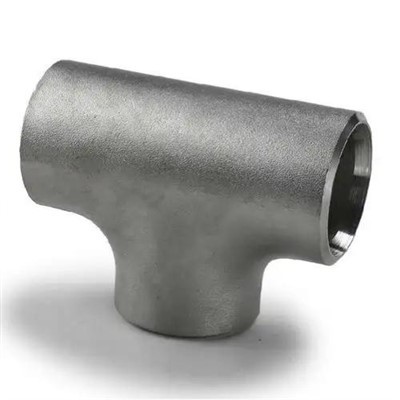
First off, let’s get one thing straight: pipe elbows aren’t one-size-fits-all. When we say “pipe elbow,” we’re talking about those angled pieces that turn a corner in your piping system—90-degree ones (the most common, like the corner of a wall), 45-degree ones for slight turns, even 180-degree ones that loop a pipe back on itself. Every single one needs specific measurements, and skip any one, and you’re in for a headache. I’ve seen guys show up to a job with an elbow that’s the right angle but too narrow for their pipe, or way too big to fit in the tight spot under a sink. Let’s make sure that doesn’t happen to you.
Let’s start with the basics you’ll need: a tape measure (the kind with inches and fractions, not just metric—though we’ll cover both, since I supply elbows to folks in all kinds of regions), a pencil and paper to jot down numbers (trust me, you’ll forget halfway through), and if you’re working with hard-to-reach pipes, a small level or even a smartphone level app. No fancy tools required—just the stuff you probably already have in your toolbox.
First measurement: the size of the pipe ends. This is the #1 mistake I see. A lot of people grab a tape and measure the outside of the pipe end, but that’s not right for metal, PVC, or any standard pipe. Wait—why? Because pipe size is based on nominal pipe size (NPS), which is a standard that’s been around forever, not the actual outside or inside diameter. Let’s break that down simply: if you have a copper pipe or PVC pipe, the outside diameter (OD) is what connects to the elbow, so that’s what the elbow’s socket (the hole at each end) is made for. If it’s a threaded metal pipe (like black steel or galvanized), the outside of the pipe at the threads is a touch bigger, but the nominal size is still the standard you’ll see on all fittings.
So how to measure it right? Grab your tape and wrap it around the outside of the pipe’s end (where it connects to the elbow) tight—don’t squish it, just snug. That gives you the circumference. Divide that number by 3.14 (pi, and no, you don’t need to remember more than that) and you get the outside diameter. For example, if the circumference is 6 inches, 6 divided by 3.14 is roughly 1.9 inches, which is a 2-inch nominal pipe—most common residential pipe size. If you’re dealing with smaller pipes (like ½-inch or ¾-inch), this method works too. Pro tip: if you’re confused, hold the pipe up to a standard ruler’s size markers. A ½-inch pipe is about the width of a dime, a ¾-inch is about a quarter. I joke with my customers that this is the “bar test” for quick estimates, but it’s pretty accurate.
Next, the angle of the elbow. This is almost as important as the size. 90, 45, 180—those are the big three, but sometimes you’ll see weird ones like 22.5-degree for super tight turns, like under a bathroom vanity. How do you measure the angle without a fancy protractor? Easy. For a 90-degree elbow, the two ends are perfectly perpendicular—like the corner of a square. For 45 degrees, hold a level up to the pipe: if one end is straight horizontal and the other is at a 45-degree tilt from vertical, that’s your angle. Another trick: measure the distance from the center of one pipe end to the center of the other, then measure the straight line between those two centers. For a 90-degree elbow, those two numbers will be almost identical—so if center to center is 6 inches, straight line is around 8.5 inches. For a 45-degree elbow, the center to center will be longer relative to the straight line. Don’t overcomplicate this—if it looks like a right angle, it’s 90, if it’s half of that, it’s 45. If you’re unsure, snap a photo of the elbow next to a piece of paper with a right angle drawn on it, and compare. I tell my customers this works every time, no exceptions.
Now, the part that trips people up the most: the elbow’s length, or “center to face” measurement. Wait—what’s center to face? That’s the distance from the center of the pipe end (the hole where your pipe inserts) to the flat face of the elbow. Why does this matter? Because when you’re installing, you need to know how much space the elbow will take up against a wall, a floor, or another fitting. For example, if you have a pipe running along a wall and you need to turn it 90 degrees into a wall, the center to face measurement tells you how far from the wall the elbow’s pipe will stick out, so you don’t drill a hole that’s too short or too deep.
How to measure center to face? Let’s use a 90-degree elbow as an example. Take your tape, and find the exact center of one pipe end (if it’s open, just guess halfway, or use a pencil to mark the middle). Then measure from that center point straight to the flat, outer face of the elbow. Do the same for the other end. If the elbow is equal on both sides (most standard elbows are), these two numbers will be the same. If it’s a long-radius elbow (used for larger pipes or for less turbulence in flow), the center to face measurement will be longer than a standard short-radius elbow. That’s important because if you have a tight space, a long-radius elbow might not fit—so you need to know that ahead of time.
Wait, hold up—are there different types of elbows? Yeah, I should mention that, because that changes measurements too. Short-radius elbows (SR) are the standard ones you see in most homes—center to face is roughly equal to the nominal pipe size. Long-radius elbows (LR) have a longer bend, so center to face is 1.5 times the nominal size. For example, a 2-inch short-radius elbow has a center to face of about 2 inches, while a long-radius is 3 inches. That’s a huge difference if you’re working in a small crawl space, right? Also, there are street elbows—those have one end that’s threaded and the other that’s a socket, so the center to face is different because one end sticks out further. I always tell customers to note if the elbow is standard or street, because that’s another thing that affects fit.
Let’s run through a real example, okay? Say you’re fixing a leak under your kitchen sink. The old elbow broke, and you need to replace it. First, grab the broken piece (don’t throw it away!)—that’s your best template. Measure the outside of the pipe ends: wrap your tape around one end, get a circumference of about 5 inches, divide by 3.14, that’s ~1.6 inches, so nominal size is 1.5 inches. Check the angle: hold it next to the corner of a wall, it’s a perfect right angle, so 90 degrees. Now measure center to face: from the center of one end to the flat face is 1.5 inches. That’s a standard 1.5-inch short-radius 90-degree elbow. Order that, and it’ll fit like a glove. But if you just measured the inside of the old pipe, you’d get something smaller, and the elbow would be too small. I’ve had a customer tell me they did that, and they spent two hours taking out a fitting that didn’t fit. Don’t be that guy.
Another common scenario: you’re running a new pipe for a bathroom, and you need to turn it 45 degrees to fit between two studs. You don’t have the old elbow, so you have to measure from scratch. First, measure the pipe that’s already there: it’s ½-inch nominal, so outside circumference is about 1.57 inches, so ½-inch size. Now, to get the angle: if you take two straight pipes that meet at the turn, the distance between the two ends (the ones that connect to the elbow) is, say, 3 inches. For a 45-degree elbow, the center to center between the two pipe ends would be roughly 2.1 inches. That tells you you need a ½-inch 45-degree elbow, standard length. If you order a 90-degree by mistake, that gap would be way too small, and you’d have to cut the pipe.
Wait, what about for larger pipes, like the ones used in commercial buildings or outdoor sprinkler systems? Same rules apply, just bigger numbers. A 4-inch pipe elbow will have a larger outside diameter, so the circumference method works just as well. For outdoor elbows, you also have to think about the material—PVC, galvanized steel, cast iron—but the measurements don’t change based on material, just the connection type (threaded, socket, flange). Flange elbows are a whole other beast—they have flat mounting holes, so you’d measure the distance between the bolt holes, but that’s for commercial jobs, and I always make sure to list those measurements on my product sheets so people don’t have to guess.
Let me also talk about the mistakes I see over and over, because I want you to avoid them. First, measuring the inside diameter. That’s a big one. The inside of a pipe is where the fluid or gas flows, but the elbow fits to the outside of the pipe, so OD is what you need. Second, guessing the angle. I know it’s tempting to just say “that looks like 45,” but take two seconds to check with a level. Third, forgetting center to face. I can’t tell you how many times a customer orders the right size and angle, but the elbow sticks out an inch too far and they can’t fit it next to a water heater. That’s all because they skipped that measurement.
What if you don’t have the old elbow or pipe to measure? No problem. Grab a piece of paper, cut a small strip, wrap it around the pipe you need to fit, mark where it overlaps, then measure the length of that strip. That’s your circumference, divide by 3.14, and you’ve got the OD. For angle, draw a right angle on a piece of paper, hold your pipe up to it, and adjust until it matches. For center to face, if you’re working from a blueprint, the plans will list the center to face measurement, so you can just pull that number. If not, use a spare elbow of the same size (from a previous job, or a sample) to measure—most suppliers like me will send free samples if you ask, so you can check the measurements before ordering.
And hey, if you’re still confused? Don’t stress. That’s why I’m here, and why every other elbow supplier worth their salt has customer service that can help. When you’re ready to order, just send over the four things: pipe size (from circumference divided by 3.14), angle (90, 45, etc.), center to face length, and if you need short or long radius. We’ll send you the exact elbow you need, no returns (well, we do accept returns for fit issues, but I’d rather get it right the first time). I’ve been doing this long enough to know that even experienced plumbers mix up measurements sometimes—pipe fitting is a tricky game, that’s why we specialize in making elbows that work, not just selling them.
Wait, one last thing: for metric users, this is all still the same, just use centimeters instead of inches. Circumference in centimeters divided by 3.14 gives you OD in centimeters, and nominal size is just converted accordingly. I supply elbows in both imperial and metric, so no matter where you’re based, we’ve got you covered.

At the end of the day, measuring a pipe elbow isn’t rocket science—it’s just paying attention to a few key numbers that make all the difference. No more wasted trips to the hardware store, no more taking apart pipes at 2 a.m. when the leak gets worse, no more guesswork. If you’re working on a project and need elbows, whether it’s a small residential repair or a big commercial job, feel free to reach out. We’ll help you get the right measurements, answer any questions, and get you the elbows you need fast. No hassle, no confusion, just elbows that fit.
Pipe Elbow References:
- Pipe Fabrication Institute. Elbow Measurement Standards for Piping Systems. PFI Standard ES-21, 2019.
- North American Plumbing Manufacturers Association. Guide to Measuring Fittings for Residential and Light Commercial Plumbing. NAPMA, 2021.
- International Organization for Standardization. Pipe Fittings – Dimensions and Specifications for Elbows. ISO 3419:2018.
Hebei Haihao Group Huadian High Pressure Pipe Fittings Co., Ltd.
As one of the most professional pipe elbow manufacturers and suppliers in China, we are able to meet the needs of the majority of our customers. Please rest assured to wholesale high quality pipe elbow made in China here from our factory. For price consultation, contact us.
Address: Donglin Industrial Zone, Mengcun County, Cangzhou City, Hebei Province, China
E-mail: haihaohuadian@outlook.com
WebSite: https://www.hhfittings.com/
