Hey there! Ever stared at a pile of screws in a project bin, wondering why some look like they’ve got a little “dip” in the top instead of that round or hex head you’re used to? Yeah, me too—until I spent way too much time fielding questions from builders, DIYers, and even a few industrial clients who’d send panicked texts like, “I bought the wrong screws and now my deck’s gonna look like a lumpy rollercoaster.” That “dip” head? That’s a countersunk screw. And if you’re a screw vendor (that’s us, by the way) or anyone who’s ever tripped over a bad hardware pick, you need to know what makes these things work. Screw
First off, let’s skip the jargon—countersunk screws are named for that little angled head, right? It’s not just some random indent; that shape’s designed to sit totally flush (that means even with, not below or above) with whatever surface you’re driving them into. Think about a wooden deck, or a metal cabinet, or even a drywall patch you’re prepping to paint. If you use a regular round-head screw there, that little nub of a head sticks out, catches your foot when you’re carrying a cooler, or leaves a weird bump when you slap a coat of paint on it. Not cool. But countersunk screws? They slot right into a matching countersink hole—drill that angled recess into the surface first, drive the screw, and boom: smooth, level. No more stubbed toes, no more uneven finishes.
Wait, but hold on—how do you actually get that hole right? That’s where a lot of folks mess up, especially DIY newbies. See, the head of a countersunk screw has a specific angle, right? The most common ones are 82 degrees and 90 degrees, depending on what you’re using them for. 82 degrees is your go-to for most woodworking projects—furniture, decks, trim work—because it fits the standard countersink bit you’ll find at any local hardware store. 90 degrees? That’s more for metal or thinner materials, like sheet metal brackets or some industrial machinery parts. If you drill the wrong angle? The head won’t sit flush, no matter how hard you crank the drill. I’ve seen so many clients come to us with photos of half-buried or sticking-out heads, and 9 times out of 10, it’s a mismatch between screw angle and hole angle.
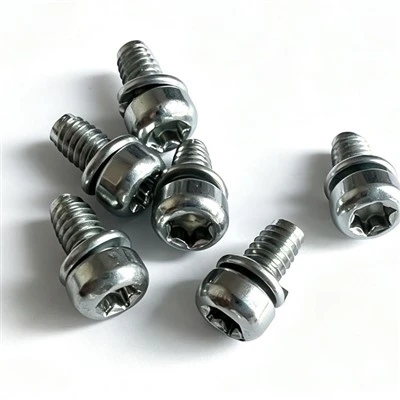
Let’s break down the parts, so you’re not staring at a screw and guessing. The head is the obvious angled part, then you’ve got the drive— that’s the slot or the hex recess you put your screwdriver or bit into. Common drives here are Phillips (the cross one, super standard), slotted (the straight old-school one), and Torx (the star-shaped one, which is way less likely to cam out—aka slip and strip the head, which is a total nightmare). We stock all three, because some folks swear by Phillips for quick jobs and others refuse to touch anything that’s not Torx for heavy-duty work. And the shank? That’s the long, straight part of the screw that goes into the material. Countersunk screws come in both fully threaded and partially threaded—partially threaded is great for wood, because it only grabs the bottom layer of wood fibers where you need the hold, leaving the top layer smooth.
Now, what are these things actually used for? I could list a million projects, but let’s keep it real. For woodworking: building a bookshelf that doesn’t wobble, attaching trim to a wall so it’s not bumpy, assembling a custom outdoor table. For metal: mounting brackets, assembling small engines, putting together HVAC ductwork. Even for plastic—like fixing a cracked plastic bin (wait, don’t use a regular screw there, you’ll crack more plastic—countersunk is gentler). The key is anytime you need a smooth, finished surface where the screw can’t stick out. Oh, and electrical panels! You never want a screw head sticking out in an electrical box—total fire hazard, and also you’ll scratch your hand trying to yank a wire through. That’s a non-negotiable use for countersunk screws, by the way.
Here’s a pro tip from our team—we’ve been supplying screws for over a decade (no need for a fancy company name, but trust that we’ve seen every mistake) that a lot of beginners miss: always use the right size. Not just length, but the head size too. If you get a countersunk screw with a tiny head for a big countersink hole? It’ll sit lopsided or stick out. Too big a head for the hole? And it’ll crack the surface material—we once had a contractor come to us screaming because a batch of screws cracked 200 deck boards, turned out they ordered a head size 2mm too big. Oops. And always pre-drill, especially for hardwood or thick metal. Pre-drilling prevents splitting wood (my deck split last year when I skipped pre-drilling—total regret) and makes driving the screw way easier, no stripping the head halfway in.
Wait, let’s clear up a common mix-up: countersunk vs. flat head screws. People use them interchangeably, right? And that’s not wrong—most flat head screws are countersunk. But not all countersunk heads are flat—some have a rounded top edge to them, like a “oval countersunk” screw. That’s for when you want a little more strength than a fully flat head, but still need it to sit flush. We stock those too, by the way—great for furniture that gets a lot of use, like dining room tables, where a tiny bit more durability is needed.
Another thing: material matters. You don’t use a steel countersunk screw for outdoor decking, that’s a rust disaster. For outdoor projects, go with stainless steel (304 or 316 grade—316 is for saltwater areas, like coastal decks) or hot-dip galvanized steel, which resists rust. For indoor woodworking, you can use zinc-plated steel, which is cheap and works fine. For plastic, brass screws work well because they’re soft and don’t crack plastic. We’ve got all grades, so you don’t have to guess—just tell us what you’re working on, and we’ll hook you up.
Let’s talk about a recent call I got, just to show how this stuff matters. A guy called last week, panicking because he was building a custom kayak rack in his garage, and his regular round-head screws were catching on the kayak every time he hauled it out. He tried grinding the heads down, but that made them rust. He came to us, grabbed a batch of 100 2-inch stainless countersunk Torx screws, and now his kayak slides on and off no problem. That’s exactly what countersunk screws are for—solving that tiny, annoying problem that ruins a whole project.
Here’s the thing: most people don’t think about countersunk screws until they mess up. They’re the unsung heroes of every build, from a $50 DIY bookshelf to a $10,000 industrial assembly line. But if you know what to look for, you can avoid half the headaches. No more stubbed toes, no more bumpy paint jobs, no more split deck boards, no more wobbly furniture.
If you’re working on a project right now, or you just need to restock for your team, reach out—we’re here to help you pick the right countersunk screw for the job. Don’t waste time ordering the wrong size or angle, don’t deal with a screw that sticks out, don’t regret skipping the flush finish. Just shoot us a message or give us a holler, and we’ll make sure you get exactly what you need, at a fair price, no hassle.
Rivet References:
- Fastening and Joining Research Institute. (2022). Standard Screw Head Angles and Applications.
- Woodworking Network. (2023). Avoiding Common Screw Mistakes in Residential Construction.
- Industrial Metal Supply Guide. (2021). Countersunk Screws for Metal Assembly and Repair.
Wuyuan Jieyi Automotive Electrical Appliance Co., Ltd.
As one of the most professional screw manufacturers and suppliers in China, we’re featured by quality products and good service. Please rest assured to wholesale bulk durable screw in stock here from our factory. We also accept customized orders.
Address: No. 7 Likeng Road, Industrial Park Wuyuan County, Shangrao City, Jiangxi Province
E-mail: wyjydqz@163.com
WebSite: https://www.wyjydq.com/
