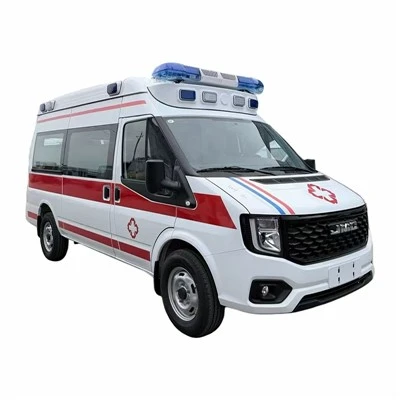
Hey everyone, let’s cut to the chase—ICU ambulances aren’t just for heart attacks or car crashes, right? Half the calls our team takes that leave us grabbing for our specialized gear instead of the usual trauma kits are for food poisoning cases that’ve spiraled way out of control. A few weeks back, we got a 2 a.m. dispatch for a 28-year-old guy who ate a bad batch of sushi at a late-night taco spot (turns out the raw fish was sitting in the truck way too long before delivery) and was so dehydrated he could barely hold a phone. That’s the stuff that makes our job different from basic ambulances—we don’t just drive people to the hospital; we handle the life-threatening messes that food poisoning can turn into before they even get inside the ER. ICU Ambulance
First off, let’s get real: not all food poisoning calls need an ICU ambulance. Most of the time, it’s just nausea, a few trips to the bathroom, and a person feeling crummy. We’d send a basic EMT unit for that, no questions asked. But when it’s bad? That’s when our rigs earn their keep. Let’s break down the step-by-step chaos—how we roll when we get a call about someone with suspected severe food poisoning.
First, the pre-call huddle. Our dispatch team’s trained to ask the right questions real quick, no fluff: how many times have they thrown up or pooped in the last hour? Are they peeing at all? Do they feel lightheaded when they stand up? Any signs of confusion? That last one’s a big red flag—if someone’s slurring or forgetting their own name, that’s not just a stomach bug; that’s electrolyte levels crashing hard, or toxins messing with their brain. For that sushi guy, dispatch noted he’d thrown up 12 times, hadn’t peed in 8 hours, and his roommate said he kept asking if he was at his own apartment. That’s an instant ICU ambulance call, not a basic one.
Now, we’re rolling to the scene. Before we even get out of the rig, we’ve already got our game plan mapped. Our ICU ambulances aren’t the same as the ones you see in old movies—they’ve got the good stuff: portable IV pumps, continuous vital sign monitors (checking heart rate, blood pressure, oxygen, even urine output via a tiny catheter), and meds that aren’t just OTC. The first thing we do when we get to the patient’s side is assess how bad they are. For food poisoning, the two big killers we’re watching for are severe dehydration and sepsis. Wait—sepsis from food poisoning? Yeah, totally. If bacteria like salmonella or E. coli get past the gut lining and into the bloodstream, that’s sepsis, and it moves faster than you can say “antibiotics.” That sushi guy later tested positive for norovirus, which isn’t usually septic, but he was so dehydrated his blood pressure dropped to 80/40—super low, and that’s the kind of thing that can lead to kidney failure if we don’t act fast.
Next step: immediate on-scene stabilization, and this is where our ICU ambulance shines. Basic ambulances can put in an IV, but our team can do it in 30 seconds or less (no, I’m not bragging—we practice that drill every shift) and start giving fluids right away. But not just any fluid—we use a balanced salt solution, like Lactated Ringer’s, which is way better than plain water because it replaces the electrolytes (sodium, potassium, magnesium) that they’re losing from throwing up and pooping. That sushi guy, for example, we put in two large-bore IVs right away—one in each arm—and were pushing fluids while we were talking to him. We also hooked him up to a monitor that was beeping every time his heart rate spiked, which it did every time he tried to sit up. If his blood pressure had kept dropping, we would’ve given a vasopressor— a med that tightens blood vessels to keep pressure up—something only an ICU ambulance has on hand, not a basic rig.
Wait, but what about the actual poisoning? Most food poisoning cases are from bacteria or viruses, so we can’t just “cure” it on scene, but we can make symptoms way worse by not managing the gut stuff. For example, if someone’s throwing up nonstop, we’ll give an anti-emetic (like ondansetron) through the IV, so they can hold down fluids enough to get to the hospital. The sushi guy was retching so hard he couldn’t keep a sip of water down, so we gave that anti-emetic within 5 minutes of getting to his place, and 10 minutes later he was able to say “I don’t feel like dying anymore.” That’s the stuff that makes the difference between a patient staying stable on the way to the hospital and crashing mid-transport.
Another big thing we do on ICU ambulance runs for food poisoning is monitor for changes the whole time we’re en route. The ride from his apartment to the hospital was only 15 minutes, but that’s enough time for his condition to flip. We had his monitor showing his blood pressure going up a little after the first fluid bolus, but then his oxygen levels dipped to 92%—which is low for someone healthy. Turns out, all that throwing up had messed with his breathing a tiny bit, so we gave him a little supplemental oxygen through a nasal cannula, and it went back up. If we’d been in a basic ambulance, we might not have the continuous monitor to catch that dip, or the extra oxygen tanks ready to go. We also track urine output the whole time—we have a tiny urinary catheter that we insert (with consent, obvi) to make sure they’re peeing every hour, which is a key sign their kidneys are working. The sushi guy peed 200ml in the first hour of transport—way more than nothing, which was a huge win for us.
Wait, what about cases that are more severe—like someone who’s not just dehydrated, but has sepsis? That’s when our ICU ambulances are basically mini ICUs on wheels. Last month, we had a 56-year-old woman who ate undercooked chicken and ended up with salmonella sepsis. By the time we got to her, she was confused, her skin was cold and clammy, and her blood pressure was so low it was hard to measure. We started her on IV antibiotics on scene (yep, we can do that—our paramedics are trained to give certain antibiotics for sepsis within the first hour, per hospital guidelines), pushed a ton of fluids, and gave her a vasopressor to keep her blood pressure up. That transport took 45 minutes, and by the time we handed her off to the ER team, her blood pressure was back to 110/70, and she was coherent. That’s the kind of outcome you can only get with an ICU ambulance—you can’t wait until you get to the hospital to start treating sepsis; every minute counts.
Now, let’s talk about mistakes we’ve made, because no one’s perfect. Once, we got called for a food poisoning case that turned out to be way worse than we thought— a guy who ate shellfish and had an allergic reaction, not food poisoning. We almost gave him anti-emetics, but then we noticed he was wheezing, so we switched gears and gave him an EpiPen and oxygen. That’s why we spend so much time training—because sometimes the call for food poisoning is something totally different, and we have to pivot fast. Another time, we had a kid who got food poisoning from contaminated ice cream, and his parents thought he was just cranky, but he was so dehydrated he was lethargic. We got there, put in an IV, gave fluids, and by the hospital he was back to his normal self, chasing his stuffed bear around the ambulance. That’s the stuff that sticks with you—helping a little kid who would’ve been miserable or worse if we’d shown up with the wrong gear.
Now, I know some people ask: “Wait, why can’t a basic ambulance handle severe food poisoning?” Let’s be real—basic ambulances are great for stable patients, or minor stuff. But when you need continuous vital sign monitoring, large-bore IVs, multiple fluid boluses, anti-emetics, vasopressors, supplemental oxygen, and sometimes even on-scene antibiotics, that’s not in a basic rig’s supply kit. Our ICU ambulances are built for critical care transport, so when a food poisoning case crosses the line from “feel bad” to “could crash,” we’re the ones who show up.
If you’re someone who works in a hospital, or a clinic, or even a public health official who deals with food safety, or even just a regular person who’s ever had to call an ambulance for food poisoning, let’s be clear: when the call goes out, you want the ICU ambulance if the patient has:
- Signs of severe dehydration (dry mouth, no pee in 8+ hours, lightheaded when standing)
- Altered mental status (confusion, slurred speech, passing out)
- Low blood pressure or rapid heart rate that doesn’t go away
- Symptoms of sepsis (fever, chills, racing heart, shortness of breath)
- Inability to keep any fluids down, even after anti-nausea meds
Now, I know this blog is about our ICU ambulance services, but I want to be transparent—we don’t take every call that gets labeled “food poisoning.” We work closely with local ERs and dispatch teams to make sure we’re sending the right unit, so we don’t waste resources. That sushi guy? We got him where he needed to go fast, stabilized him so he didn’t get worse, and by the time he was in the hospital, his electrolytes were almost back to normal. That’s the whole point.
If you’re a hospital that needs reliable critical care transport for severe food poisoning (or any other emergency that needs ICU-level care), or if you’re a clinic or public health group that’s looking to partner with a team that knows exactly how to handle these cases, we’re the ones to call. We’ve got years of experience, our rigs are stocked with the latest gear, and our paramedics are trained to handle every twist a food poisoning case can throw at you. Don’t wait until it’s an emergency—reach out to us to chat about how we can support your team or your patients, because when it comes to severe food poisoning, you don’t want to be stuck waiting for a rig that’s not equipped for the job.
Oh, and one last thing—always practice food safety, yeah? Don’t eat sushi that’s sitting out at a party, don’t eat undercooked chicken, wash your hands after using the bathroom. But when the worst happens, know that there are ICU ambulances out there that know exactly how to turn a scary food poisoning call into a patient getting back to normal.
Garbage Truck References:
- American College of Emergency Physicians. (2022). Critical care transport for gastrointestinal emergencies. ACEP Emergency Medicine Guidelines.
- Centers for Disease Control and Prevention. (2023). Severe dehydration from food poisoning: Recognition and prehospital management. CDC Food Safety Division.
- National Association of EMS Physicians. (2021). Prehospital antibiotic administration for sepsis in gastrointestinal infections. NAEMS Protocol Series.
Hubei Ruitu Technology Co., Ltd.
Hubei Ruitu Technology Co., Ltd. is one of the most experienced icu ambulance manufacturers and suppliers in China, also supports customized service and OEM service. Welcome to buy advanced icu ambulance made in China here and get pricelist from our factory. Also, 1 year warranty is available.
Address: Xingguang Road, Zengdu District, Suizhou City, Hubei Province
E-mail: Sales@ritumax.com
WebSite: https://www.ruitumotors.com/
