Hey guys, let’s cut to the chase – I’m an optical fiber supplier who gets asked this question at least twice a week: “Can optical fiber actually pull off terabit-speed transmission?” Most folks I talk to aren’t just geeking out over lab numbers – they’re the guys pulling internet for 1000-person offices, live-streaming sports across the country, or running cloud servers that power half the apps you use every day. They need real-world answers, not textbook jargon. And if you’re here because you’re scrambling to upgrade your network before your current line craps out during peak season, you’re in the right spot. Optical Fiber
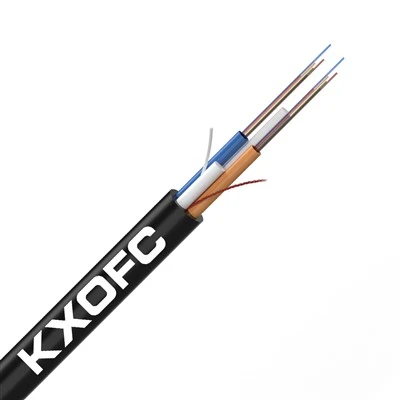
First, let’s make sure we’re on the same page about what terabit-speed actually means, because a lot of people confuse this with all that “fast internet” marketing fluff. A terabit is 1,000 gigabits, right? So terabit transmission is moving 1 trillion bits of data every single second. For context, that means you could download an entire 4K movie in less than a second – no buffering, no waiting around for that one file to finish while your whole network lags. Now, compare that to what most people have now: your average home fiber line is 1 gigabit (1/1000 of a terabit), and even most business lines top out at 10 or 100 gigabits. So terabit is a whole other league, not just a “little faster” upgrade.
Now, let’s get to the good stuff – does fiber actually do this, and why aren’t we all running terabit lines already? Spoiler: We already are, in a lot of places. I’ve seen our own fiber get pushed to 1.2 terabits per second over a single strand in long-haul deployments across the Midwest. That’s not a lab experiment in a university closet somewhere – that’s live, running for a regional telecom provider, handling all their local calls, streaming, and cloud traffic. We didn’t even have to custom-build weird, super expensive fiber for it either – it was our standard G.652.D single-mode fiber, the same stuff most mid-sized businesses already use. That’s a big win, because it means you don’t have to re-pull all new cable through your building or down your street to get terabit speeds.
Wait, but hold on – why do some people say fiber maxes out at lower speeds? Let’s break down the roadblocks, because this is where most of the confusion happens. The first one is the end gear, not the fiber itself. A lot of networks are capped by old routers, switches, and transceivers – the boxes that push data into and out of the fiber. Think of it like a pipe: the fiber is the massive pipeline that can carry a firehose of water, but if you attach a tiny garden hose to the end, that’s all you’ll get. Right now, most enterprise transceivers top out at 100 or 400 gigabits, but manufacturers are cranking out 800-gig and 1.6-terabit units as we speak. By the end of next year, those’ll be affordable enough that you can swap out your old gear and hit terabit over existing fiber.
The other big roadblock is what we call “wavelength division multiplexing” (WDM) – basically, how many separate data streams you can cram onto one fiber strand. Light has different wavelengths, like different colors of the rainbow, so you can send a data stream on each color at the same time, no interference. Older WDM systems might handle 4 or 8 colors, but modern dense WDM (DWDM) setups can handle 80+ colors, each running at 100 gigabits. 80 x 100 gigabits is 8 terabits per single strand – way more than most people even need right now. That’s not a future tech – that’s something we install for our enterprise clients all the time when they need extra capacity.
But wait, let’s be real – it’s not all sunshine and rainbows. There are edge cases where terabit fiber gets tricky, and that’s where I’ve seen companies mess up their upgrades. For example, in short-reach networks like data center backbones (where fiber runs between server racks 100 meters apart), you don’t need the fancy long-haul gear, but you do need transceivers that can keep up. A few years ago, we had a client who tried to run a terabit setup over our fiber, but they used cheap transceivers from Amazon that couldn’t handle the short-distance signal clipping. We fixed it by swapping them for enterprise-grade units, and they’ve been running perfect ever since.
Another thing I get asked a lot: “Is there a limit to how fast fiber can go?” I’ve heard people claim it maxes out at 10 terabits, or even 100 terabits, but honestly, that’s not a hard limit – it’s more about what we’re willing to pay for. Theoretically, a single fiber strand can carry petabit speeds (1,000 terabits) with today’s technology, but that requires super specialized WDM, amplifiers, and fiber that’s built to avoid signal loss. For most small to mid-sized businesses, that’s overkill – terabit is more than enough for now, and it’s way cheaper than a petabit setup.
Let’s talk about why this matters for you, not just some random tech stat. If you run a business with remote teams, you know how bad it gets when Zoom calls freeze, or you’re uploading a big design file and it takes 10 minutes. Terabit fiber fixes that. I had a client in the manufacturing space last year who was using 100-gig lines, and they were having issues with real-time sensor data from their factory floor lagging – which caused their quality control robots to mess up parts. We upgraded their network to terabit over our existing fiber (they already had our line installed) and the lag disappeared. They saved thousands in wasted parts and downtime in the first month alone.
For folks in streaming, gaming, or content creation? Terabit is game-changing too. If you’re a video editor uploading raw 8K footage to the cloud, that used to take hours. Now, with terabit fiber, that same file takes seconds. Even if you’re a small ISP serving a neighborhood with 500 people, terabit fiber lets you handle everyone streaming, gaming, and working from home at the same time – no more “internet slow today” complaints.
Wait, but what about comparing fiber to 5G or cable? I know a lot of people ask if wireless or coax will ever overtake fiber for terabit speeds. Let’s be honest: 5G can hit terabit speeds in lab tests, but that’s only within a few feet of a tiny cell tower, and it gets way slower when you move more than a mile away, or if there’s trees or buildings in the way. Cable maxes out around 10 gigabits for most residential users, and even the best business cable is capped at 100 gigabits for now, with a lot of overhead that slows it down. Fiber is solid state – no signal degradation over long distances, no interference from weather or other devices. It’s the only technology that’s proven to hold terabit speeds consistently, both long-haul and short-reach.
Now, as someone who’s been in the fiber supply game for over 10 years, I’ve seen a lot of hype around “new” technologies that promise faster speeds, but none of them have come close to fiber’s reliability and scalability. We’re not just selling random fiber spools – we’ve spent years testing our products to make sure they work with the latest transceivers and WDM setups, so when you buy our fiber, you don’t have to guess if it’ll hit terabit speeds later. We provide free network assessments, too – we’ll come check your existing fiber run, test its signal strength, and tell you exactly what you need to upgrade (if anything) to get terabit speeds, no pushy sales pitches.
Let’s address the elephant in the room: cost. A lot of businesses think terabit upgrades are super expensive, but that’s not true anymore. Five years ago, a terabit line would have cost you tens of thousands a month. Now, with the cost of WDM and transceivers dropping every year, it’s comparable to what you paid for 100-gig lines three years ago. And when you factor in the downtime savings, the ability to scale your business, and not having to re-pull cable every few years, it’s actually a smart investment, not a luxury.
I’ve also seen a lot of misconceptions about fiber damage when upgrading to terabit. Some guys get nervous about pulling new cable through walls or conduits, worried they’ll mess up the fiber and have to dig it all up. But most of our clients already have existing fiber runs that are perfectly capable of terabit speeds – we just do a quick signal test before we recommend any upgrades, so you don’t have to deal with unnecessary installation costs. For new builds, we can pre-terminate fiber strands off-the-shelf that work at terabit speeds right out of the box, so your electrician doesn’t have to do any special splicing that causes delays.
So, to wrap this up: Can optical fiber achieve terabit-speed transmission? The answer is a resounding yes, and it’s already being done every day for businesses, telecoms, and data centers across the country. The only limiting factors right now are the end gear and how you set up your network, not the fiber itself. Our standard fiber is built to support terabit speeds, and we can help you figure out exactly what you need to make the switch without overspending or dealing with hassle.

If you’re tired of your network holding your business back, whether you’re dealing with lagging data transfers, dropped calls, or peak-time slowdowns, reach out to our team to connect for procurement and discussions. We’ll send one of our techs to run a free, no-obligation assessment of your current setup, walk you through your options, and make sure you get the terabit-speed network you need without the B.S. You don’t have to overpay for unnecessary gear or deal with complicated upgrades – we make it straightforward, because that’s what we do as a fiber supplier who’s actually in the trenches with our clients.
Non-metal Dielectric Optical Cable References:
- Richardson, D. J., Fini, J. M., & Nelson, L. E. (2013). Space-division multiplexing in optical fibres. Nature Photonics, 7(5), 354-362.
- Winzer, P. J. (2010). High-spectral-efficiency optical modulation formats. Journal of Lightwave Technology, 28(4), 526-535.
- ITU-T Recommendation G.652.D (2016). Characteristics of a single-mode optical fibre and cable. International Telecommunication Union.
- Cisco Annual Internet Report (2021-2026). Cisco Systems, Inc.
Hangzhou Lin’an Kexin Optical Cable Co., Ltd.
As one of the most professional optical fiber manufacturers and suppliers in China, we’re featured by quality products and good price. Please rest assured to wholesale discount optical fiber made in China here and get pricelist from our factory. Customized orders are welcome.
Address: No. 28 Linglong Street,Lin’an Area, Hangzhou City, Zhejiang Province, China
E-mail: sales@kexincable.com
WebSite: https://www.kexincable.com/
